What Wheels and Tires Fit Best On a 2007-2013 Chevrolet Silverado 1500?
September 17, 2026
Quick Answer
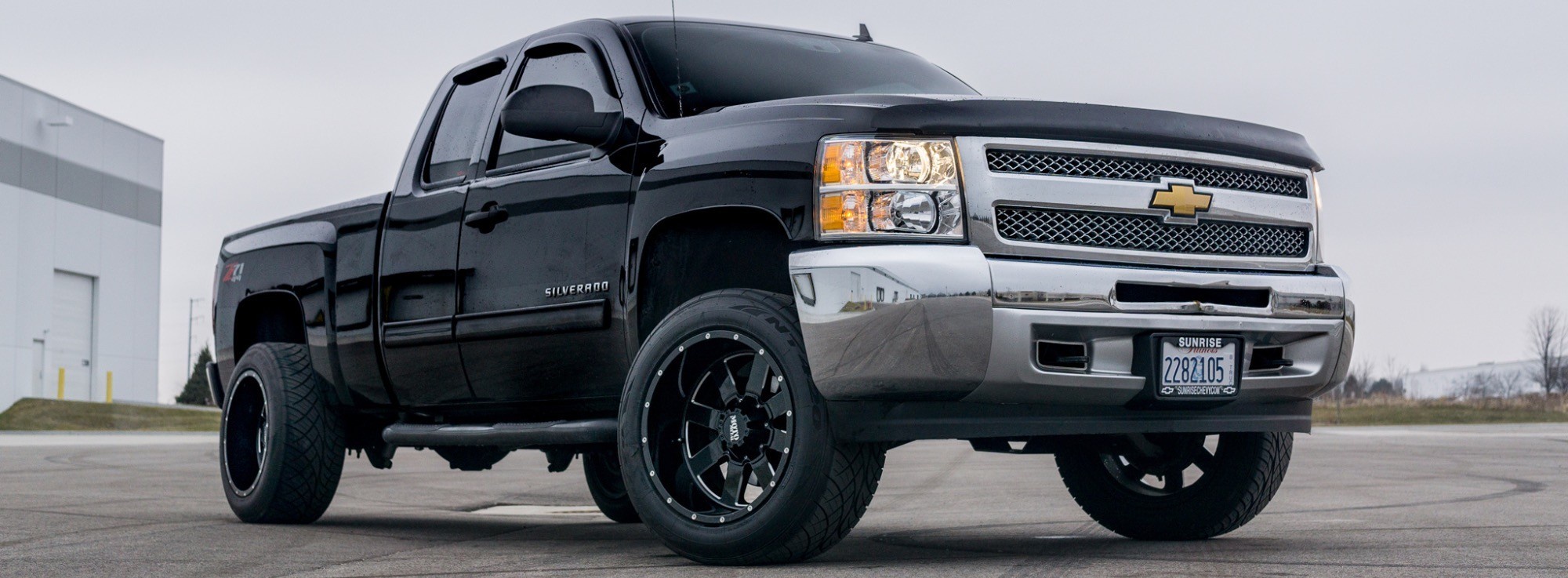
Every 2007-2013 Silverado 1500 is 6x139.7 with a 78.1mm hub bore, 2WD and 4WD alike. The setups our gallery sees most: 20x9 at 0 to -12 with a 33 on a leveling kit, 20x12 with a 33x12.5 on a 3 to 3.5 inch front lift, and 20x10 at -24 with a 35 on a 6 inch lift. Stock height takes about a 32 before you start cutting.
This is the truck everybody has, which means the fitment questions get asked ten times a day and answered badly about nine of them. Below is what our gallery actually shows at every suspension height, from bone stock to eight inches of lift to slammed, plus the two things about this generation that catch people out: it has no torsion bars, and a 2007 badge does not tell you which truck you own.
The Numbers You Need Before You Shop
| Spec | Value |
|---|---|
| Bolt pattern | 6x139.7 (6x5.5"). Unchanged 2007 through 2013, 2WD and 4WD, every cab and bed. |
| Hub bore | 78.1mm. Most aftermarket wheels ship at 87.1mm or 106mm and need hub-centric rings to center properly. |
| Lug thread | M14x1.5, conical seat. |
| Factory wheels | 17x7.5, 18x8, and 20x8.5. No 16-inch wheel was offered on this body. |
| Factory tires | P245/70R17 and P265/70R17 on 17s, P265/65R18 on 18s, P275/55R20 on 20s. |
| 2500HD / 3500 | 8-lug, and the pattern changed mid-run. 8x165.1 through 2010, 8x180 from 2011. Nothing here applies to them. |
On the 20x8.5 factory wheel the offset is +31, which is well documented because the whole OE-replica industry builds that wheel. The 17 and 18 inch factory offsets we could not pin down to a source we trust, so we are not printing them. The one database that publishes them lists the identical +31 for every diameter and width the truck came with, which no manufacturer does, and the same record lists a 19x8 fitment that appears in no North American tire database. We would rather leave a blank than hand you a number that gets you the wrong wheel.
GM sold two completely different trucks as 2007 models. The carryover old body was badged Silverado Classic and the new body is the one this guide covers. Bolt pattern and hub bore are the same on both, so wheels interchange, but almost nothing else does. The Classic offered 16-inch wheels and this body does not. The Classic 4x4 has torsion bars and this body does not. Even the front hubs differ, because the Classic runs passive ABS and the new body runs active. There is no published cutover date inside the model year, so identify by the headlights: the Classic has a split headlamp with a filler panel between the units, the new body has a one-piece assembly.
Need a refresher on what these numbers do? Offset and backspacing explained, and what wheel width you should actually run.
Stock Height
The tier most guides skip, including the version of this one we are replacing. Plenty of people are not lifting anything and just want to know what bolts on.
Stock suspension takes roughly a 32-inch tire before the fender liner and the lower valance start getting involved. Where it gets interesting is width: because this truck's fenders sit reasonably high over the tire, the gallery is full of stock-height builds running aggressive offsets with a short tire and getting away with it.
| Build | Wheel | Tire |
|---|---|---|
| 2013, 4WD | 18x9 +18 | 275/65R18 |
| 2008, 2WD | 20x10 +6 | 275/55R20 |
| 2007, 4WD | 20x12 -44 | 32/11.5R20 |
| 2012, 4WD | 22x12 -44 | 305/45R22 |
| 2011, 2WD | 22x9.5 +12 | 305/40R22 |
That 2012 on a 22x12 -44 with a 305/45R22 is the one worth studying. A 305/45R22 is only about 32.8 inches tall, so the truck is buying all of its presence with width instead of height. That is the whole trick on a stock-height build: keep the tire short and let the offset do the work.
Leveled, 2 To 3.5 Inches Up Front
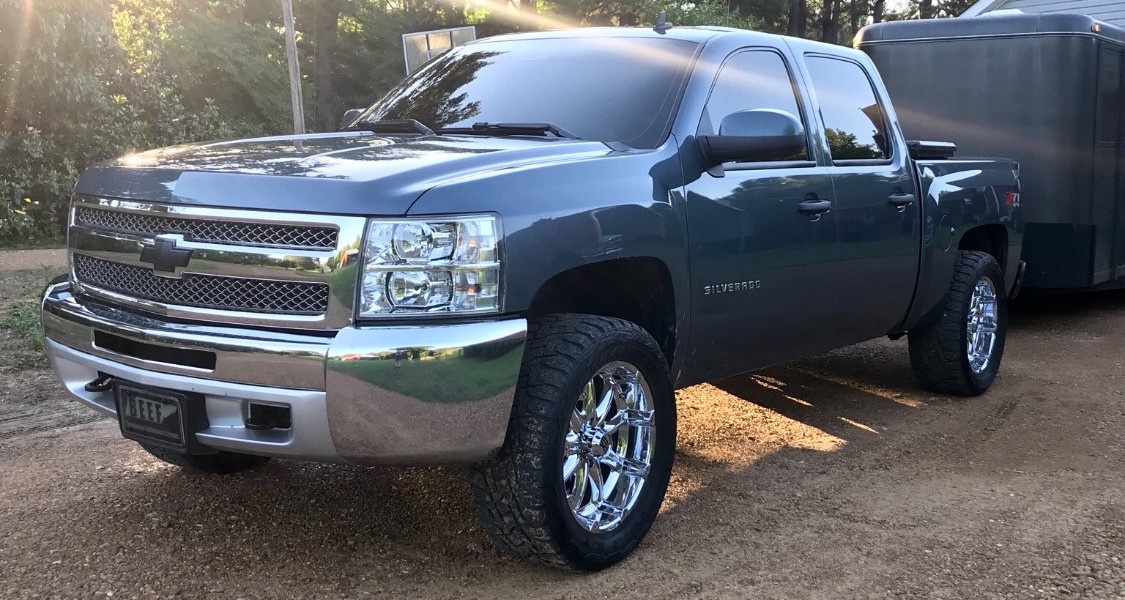
20x9 At 0 To -12, 33-Inch Tire
The cheapest visible change you can make to this truck. A 0 and a -12 are twelve millimeters apart, so the -12 sits a hair further out, and both land close to flush with the fender.
- Wheel 20x9, 0 to -12 offset.
- Tire 33 inch, commonly 33x12.5R20 or 295/60R20.
- Trimming Minor plastic work on the fender liner at the rear of the front wheel well.
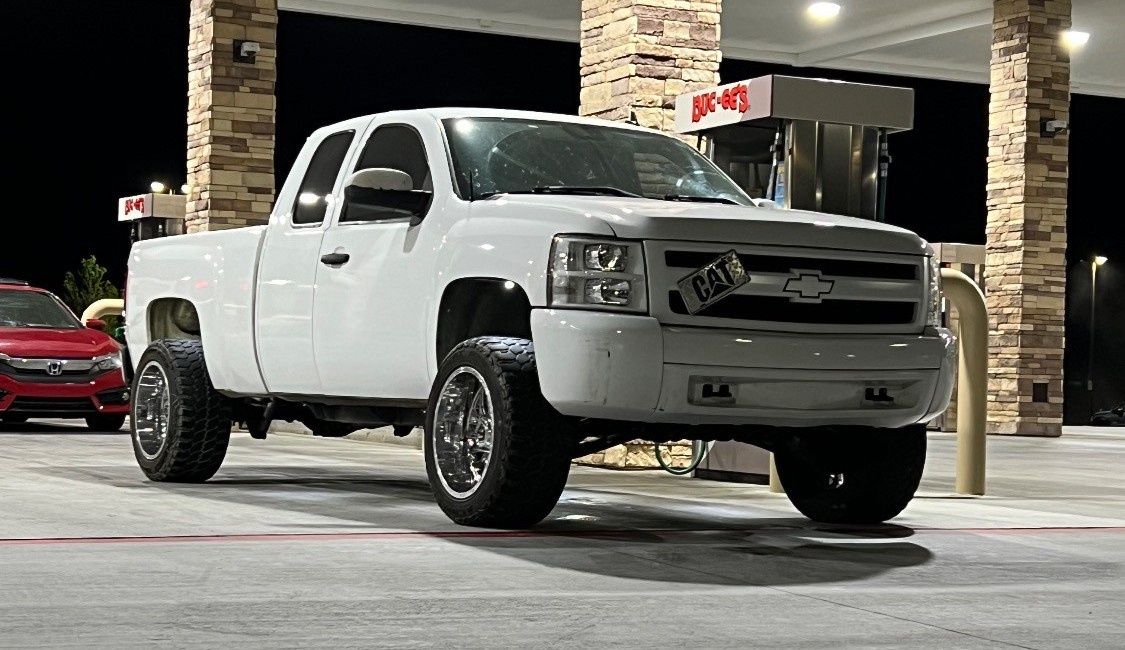
20x12, 33x12.5 Or 305/55
Around three and a half inches is where you run out of factory geometry, and the popular move at that height is a straight 12-wide. Running a 20x12 on a three-and-a-half-inch front lift surprised us the first time we pulled the data, and it keeps showing up.
- Wheel 20x12, typically -44 offset.
- Tire 33x12.5R20 or 305/55R20.
- Tire choice matters here Street and hybrid treads, not mud tires. A mud tire's chunky sidewall lugs are what catch the fender and the bumper corner on a 12-wide.

Not every leveled build goes wide. The gallery also has a 2010 on 17x9 -12 with a 285/70R17 and a 2012 on 18x9 0 with a 285/65R18. Smaller diameter, taller sidewall, same overall height, and considerably cheaper in tires.
Lifted, 4 Inches And Up
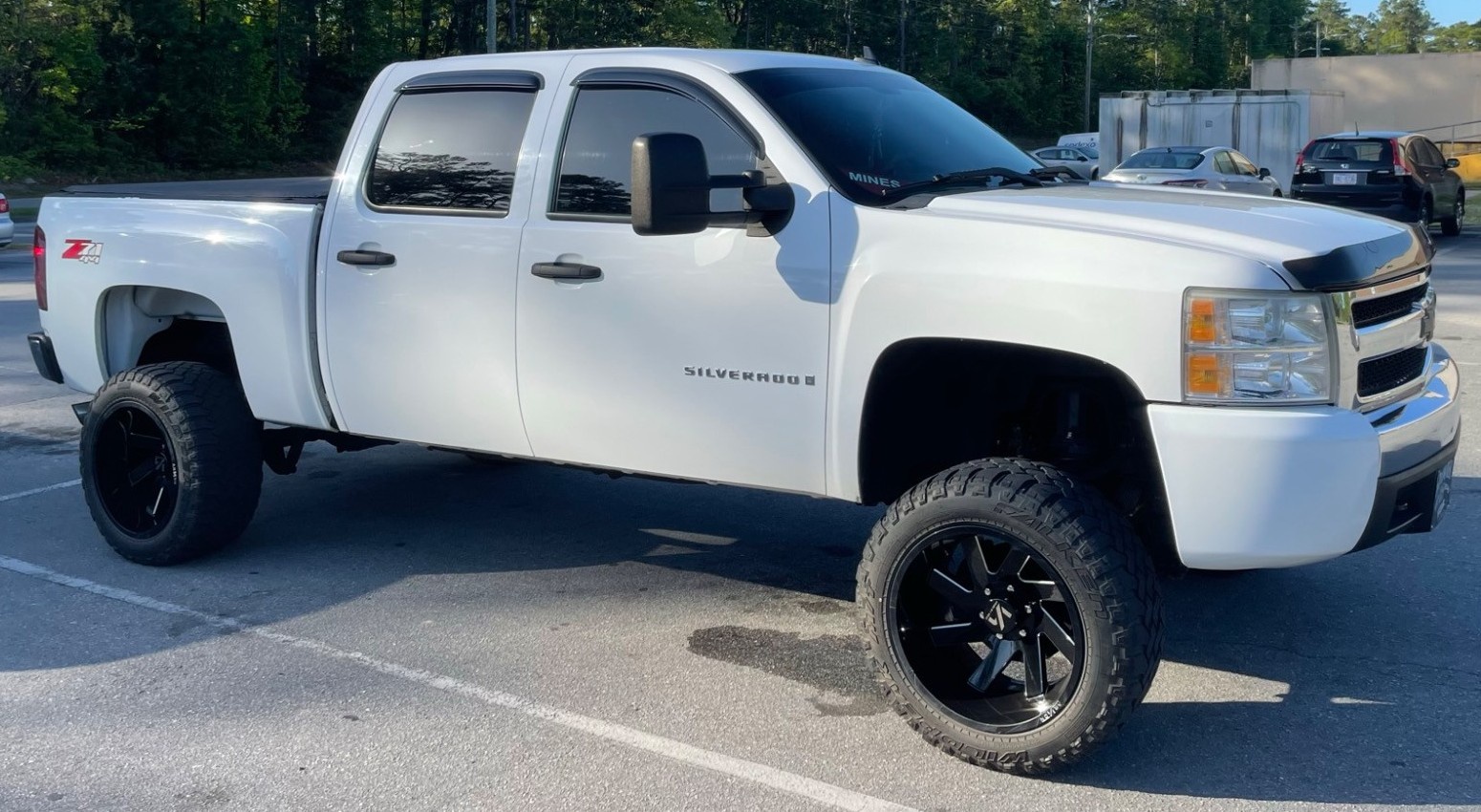
Six Inches, And The 12-Wide Versus 10-Wide Fork
Six inches is the volume lift on this truck and it gives you two genuinely different builds off the same kit.
- 20x12 with a 33x12.5 Maximum stance, tire stays short, minimal trimming. This is what most six-inch builds in our gallery are running.
- 20x10 at -24 with a 35 Narrower wheel pulls the tire in, which buys back the clearance a 35 needs. Still expect to trim, but it drives like something you can commute in.
- Want a 35 with no trimming? Go to seven or seven and a half. The extra height is what buys the clearance, not the wheel.

Real Lifted Builds, 4 Inches Through 8
| Build | Wheel | Tire | Lift |
|---|---|---|---|
| 2011 | 20x9 +1 | 33/12.5R20 | 4 inch |
| 2011 | 17x9 -12 | 285/70R17 | Bilstein 4 inch |
| 2012 | 20x9 -12 | 285/55R20 | Rough Country 5 inch |
| 2011 | 18x9 +1 | 35/12.5R18 | Rough Country 6 inch |
| 2009 | 18x12 -44 | 35/12.5R18 | Rough Country 7.5 inch |
| 2011 | 20x12 -44 | 35/12.5R20 | Rough Country 7.5 inch |
| 2008 | 20x12 -44 | 35/12.5R20 | Superlift 8 inch |
Three Things A Lift Kit Listing Will Not Tell You
A spacer level costs you up-travel. A strut-top spacer pushes the whole strut assembly down, which gains you down-travel and static height while removing up-travel, sometimes as much as two inches of it. That is why a spacer-leveled truck can feel harsh over a driveway lip that never bothered it before. A replacement leveling strut or coilover raises the truck by changing the spring seat instead, and keeps the travel.
4WD trucks need a differential drop as the lift grows. Most quality kits from four inches up include the drop brackets for exactly this reason: lowering the front differential pulls the CV angles back toward something the joints can live with. If a cheap kit does not include it, that cost has not gone away, it has just moved to your CV shafts.
Aftermarket upper control arms can cause the rub they are sold to fix. Lift UCAs are thicker and sit at a different angle than the factory arm, so on some combinations the tire finds the arm at full lock even though it cleared before. The fixes are a steering stop, a spacer, or a wheel with less backspacing. Worth knowing before you blame the tire size.
One useful hard threshold: factory brake lines are generally fine through a leveling kit and into the four inch range. Extended line kits for this truck start being specified at five inches, so five is roughly where that becomes a line item.
Lowered
The other tier nobody writes about. Lowering flips the offset logic completely: a lifted truck wants negative offset to push the wheel out, and a dropped truck wants the wheel tucked, which means positive offset and a shorter, narrower tire, because the fender lip is now sitting on top of it.
| Build | Wheel | Tire | Drop |
|---|---|---|---|
| 2012 | 20x8.5 +31 | 285/50R20 | 2 front, 4 rear |
| 2010 | 22x12 -44 | 305/40R22 | 2 front, 4 rear |
| 2008 | 26x9.5 +28 | 295/25R26 | 4 front, 6 rear |
| 2007 | 24x9.5 +18 | 305/35R24 | 5 front, 7 rear |
Read the offsets down the column. The deep drops are on 8.5 and 9.5 inch wheels at +18 to +31 with sidewalls in the 25 to 35 series range. The 2010 on a 22x12 -44 is the outlier and it works because a 2/4 is a mild drop. Once you are past that, width and poke are the first things to go. Note that on a lowered Silverado the fender liners usually come out entirely rather than getting trimmed.
This Generation Has No Torsion Bars
Worth its own section because it catches people constantly. The 2007-2013 Silverado 1500 uses a coilover independent front suspension in both 2WD and 4WD. There is no torsion bar, no adjuster bolt, and no free ride height anywhere on the truck.
The confusion is earned. The GMT800 before it had torsion bars on the 4x4. The OBS before that had them. And GM kept using them on the HD trucks well past 2007, so a 2500HD owner genuinely can crank the front end while a 1500 owner cannot. If somebody tells you to just turn up the keys on your 2009 Silverado 1500, they are describing a different truck.
What that means practically: on this generation, height costs money. Your options are a strut spacer, a preload spacer, or a complete replacement strut or coilover, and each behaves differently. The replacement strut is the one that raises the truck without eating suspension travel, and it is why it costs more.
What Actually Rubs, In Order
Going wider and taller, the contact happens in a predictable sequence on this body.
First, the inner fender liner at the rear of the front wheel well. This is the one almost everybody hits, and it happens at steering lock and under compression rather than rolling straight. Trimming or heat-forming the liner is the standard first move.
Second, the pinch weld and inner fender seam behind it. Once the plastic is out of the way, the sheet metal lip is next. Removing an inch or two from that edge, then grinding and painting the bare metal so it does not rust, is the single most common metal trim on these trucks.
Third, the lower valance and the bumper corners. The plastic air deflector under the front bumper is a separate bolt-on piece and plenty of people simply delete it.
Fourth, on lifted trucks, the upper control arm. See the note above. This one is as likely to be caused by the lift hardware as by the tire.
The test that finds everything at once is full steering lock, in reverse, over a driveway apron. Do that before you decide what needs to come off, not a lap of a flat parking lot. And if you are going to cut, read this first.
Diameter Does Not Change How Far It Sticks Out
Width and offset set where the wheel sits. A 20x12 at -44 and a 22x12 at -44 poke the same amount, so going up in diameter does not make a setup rub more at the fender. What diameter changes is your tire menu and your brake clearance, and the brake clearance only matters going down. Below the factory 17 you start running out of room over the caliper, which is why no 16-inch wheel was offered on this body in the first place.
Will Silverado Wheels Fit A Chevrolet Colorado?
People ask this constantly and the answer is generation-dependent, with one genuine trap in it.
| Colorado | Pattern | Silverado wheel fits? |
|---|---|---|
| 2004-2012 | 6x139.7, matches | No. The hub itself is far larger than a Silverado wheel's 78.1mm bore, so the wheel will not sit on it, and the studs are M12x1.5 instead of M14x1.5. |
| 2015-2022 | 6x120, does not match | No. Different pattern entirely. |
| 2023 and newer | 6x139.7, matches | Yes, on pattern, bore and thread. Check offset and width, because the Colorado is a narrower truck. |
The first-generation case is the one that gets people. The bolt pattern matches exactly, so the wheel lines up on the studs and everybody assumes they are done. It still will not go on, because the Colorado's hub flange is much bigger around than the Silverado wheel's center bore. That is why an entire cottage industry exists machining wheel bores for those trucks. If you are on a 2004-2012 Colorado, you need a hub-centric adapter built for that hub, not a Silverado wheel and hope.
On a 2023 or newer Colorado the specs genuinely line up, but a Silverado wheel is built for a wider track. A factory-style 20x8.5 at +31 is a reasonable starting point, and an aggressive aftermarket Silverado wheel like a 20x10 at -24 will poke hard and find the fender long before it would on the full-size. There are also reports that the current ZR2 uses a different hub than the rest of the lineup, so measure before you buy if that is your truck.
More on that truck: what fits a Chevy Colorado.
2007-2013 Silverado 1500 Fitment FAQ
What is the bolt pattern on a 2007-2013 Silverado 1500?
6x139.7, also written 6x5.5 inches. It is the same for every 2007 through 2013 Silverado 1500, 2WD and 4WD, every cab and bed configuration, and it did not change during the run. Hub bore is 78.1mm and the studs are M14x1.5. The 2500HD and 3500 are 8-lug and none of this applies to them.
What is the biggest tire that fits with no lift?
About a 32 before you start cutting. Our gallery has stock-suspension builds on a 275/65R18 and a 32/11.5R20, and a 2012 running a 305/45R22, which is roughly 32.8 inches tall. Width is where stock height is more forgiving than people expect, so a short tire on an aggressive offset is the move. Anything taller than a 32 means trimming the inner fender liner and probably the lower valance.
Will 33s fit with just a leveling kit?
Yes, with minor plastic trimming. The most common setup our gallery sees on a leveled 2007-2013 Silverado 1500 is a 20x9 at 0 to -12 offset with a 33-inch tire. Expect to trim or heat-form the inner fender liner at the rear of the front wheel well. Going to a 12-wide at that height is also common but pushes you into street and hybrid tread patterns, because a mud tire's sidewall lugs are what catch the fender.
Will 35s fit on a 6 inch lift?
Yes, and the wheel you pick decides how much cutting you do. A 20x10 at -24 pulls the tire in far enough to run a 35 with manageable trimming, and we have gallery builds doing exactly that. A 20x12 at that height works better with a 33x12.5. If you want a 35 with no trimming at all, seven or seven and a half inches of lift is what buys you the clearance, not a different wheel.
Can I crank the torsion bars on a 2007-2013 Silverado 1500?
No, because it does not have any. This generation uses a coilover independent front suspension in both 2WD and 4WD, with no torsion bar and no ride height adjustment. The previous GMT800 4x4 had torsion bars and so did the HD trucks of the same era, which is where the confusion comes from. On a 2007-2013 1500, raising the front means a strut spacer, a preload spacer, or a replacement strut or coilover.
Is a 2007 Silverado the old body or the new body?
It can be either. GM sold the carryover old body as the 2007 Silverado Classic alongside the new 2007 Silverado, and there is no published cutover date inside the model year. Tell them apart by the headlights: the Classic has split headlamp units with a filler panel between them, and the new body has a one-piece assembly. Both are 6x139.7 so wheels interchange, but the Classic offered 16-inch wheels and has torsion bars up front, and this body has neither.
Will Silverado wheels fit a Chevrolet Colorado?
Only on a 2023 or newer Colorado, which shares the 6x139.7 pattern, the 78.1mm hub bore and the M14x1.5 thread. A 2015-2022 Colorado is 6x120 and will not take them at all. A 2004-2012 Colorado is the trap: the bolt pattern matches, but its hub flange is much larger than a Silverado wheel's center bore, so the wheel will not seat, and its studs are M12x1.5. That generation needs a hub-centric adapter built for it.
Do I need a differential drop with a lift kit?
On a 4WD, yes, as the lift height grows. Dropping the front differential brings the CV shaft angles back toward something the joints can live with, and most quality kits from four inches up include the brackets for that reason. If a kit at that height does not include a diff drop, the cost has not disappeared, it has moved to your CV shafts.
Does wheel diameter change how far the tire sticks out?
No. Width and offset determine where the wheel sits, so a 20x12 at -44 and a 22x12 at -44 stick out exactly the same. Diameter changes two other things: which tire sizes are available to you, and brake clearance. Brake clearance only matters going down, and on this truck below the factory 17 you run out of room over the front caliper, which is why no 16-inch wheel was ever offered on this body.
Shop Wheels And Tires For Your Silverado
Tell us the year, the drivetrain and what suspension is under it, and we will tell you what fits rather than guessing at it. We have been documenting truck builds since 2012, with over 100,000 real setups and 1.25 million photos, so you can look at your exact wheel and tire combination on somebody else's Silverado before you spend a dollar. Free shipping to the lower 48, free mounting and balancing on wheel and tire packages, and financing as low as 0% APR through Affirm.
Stock Trucks Suck
Real photos, real offsets, real builds. See what fits before you buy.
Shop Silverado 1500 Get Guided On Your 07-13More fitment guides
Bolt pattern, hub bore, stud size, factory wheel sizes and factory tire sizes reflect OEM wheel catalogs, manufacturer documentation and established fitment databases. Setup recommendations at each suspension height come from the Custom Offsets fitment gallery, and every build linked above is a live gallery entry with specs recorded by its owner. Suspension and trimming guidance reflects kit manufacturer documentation and owner-reported consensus. Factory offsets for the 17 and 18 inch wheels, and lug torque, are deliberately omitted because the available sources conflict or do not hold up. What are you running?