Truck class is the first decision you make when you're in the market for a new pickup. It sets your towing, ride quality, fuel bill, overall cost, and yes, what wheels and tires will actually fit. So before you buy one, or wonder if you already bought the wrong one, here's the breakdown.
First, the Names Are Lies
Half ton, 3/4 ton, and one ton used to mean payload. A half ton carried about 1,000 pounds, a 3/4 ton about 1,500, a one ton about 2,000. That was decades ago. Today a half ton F-150 can carry well over 2,000 pounds and a one ton dually can carry more than three tons. The names stuck, but the numbers didn't.
It's more useful to think of them as size classes, not weight limits. Half ton means 150/1500 trucks. 3/4 ton means 250/2500. One ton means 350/3500. Everything below is about what those classes really do.
Half Ton Trucks: F-150, Silverado 1500, Ram 1500
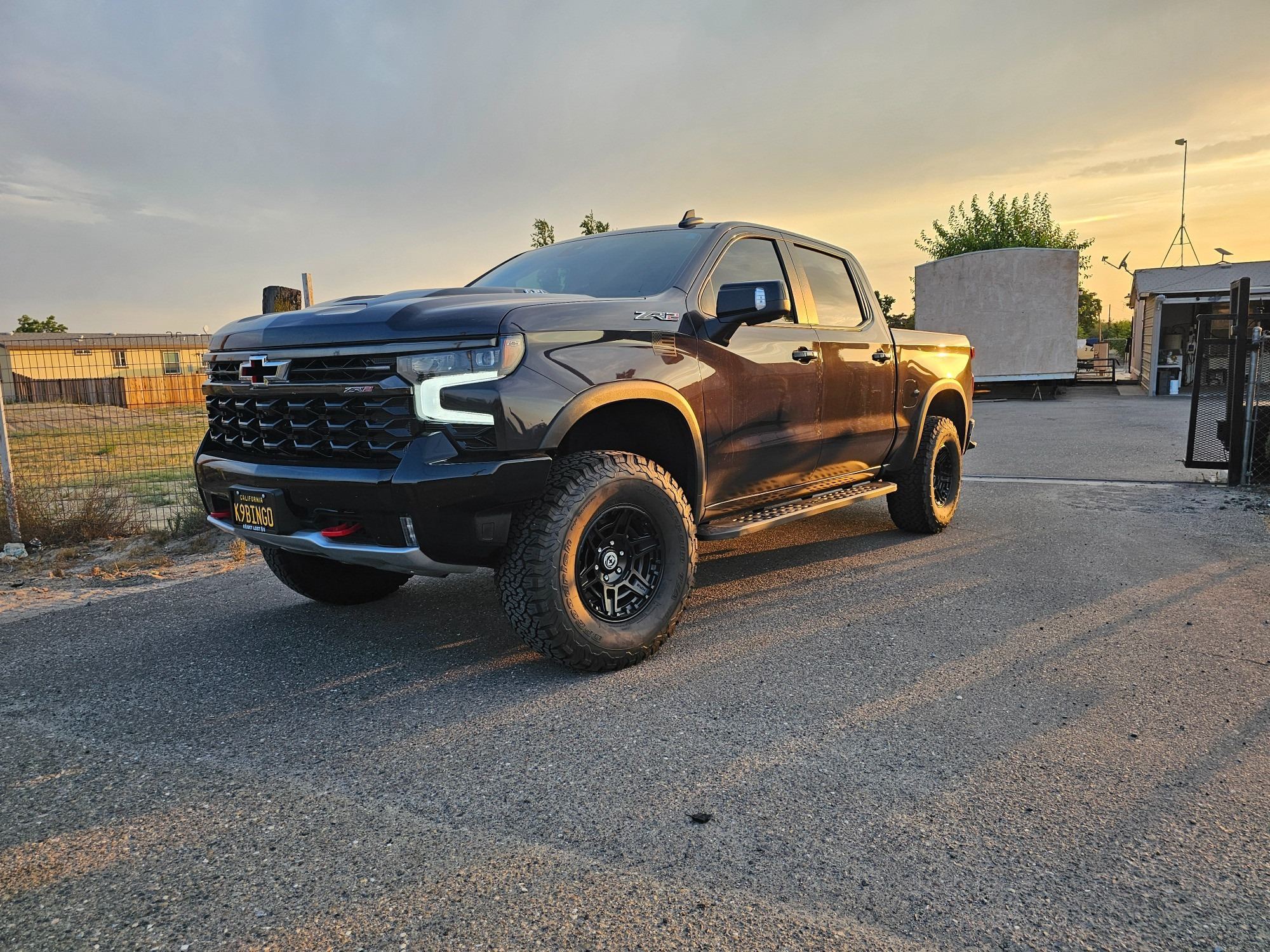
Half tons are the entry point to full-size trucks for every major manufacturer: the Ford F-150, Chevy Silverado 1500, and Ram 1500. Each one is the best-selling truck its OEM makes, by a wide margin.
Payload and towing
Roughly 1,300 to 2,400 pounds of payload and 7,000 to 13,000 pounds of towing, depending on cab, bed, engine, and axle. The high numbers only show up on specific configurations. Most half tons on the road land in the middle.
Gas vs diesel
Mostly gas. Turbo four cylinders and V8s do the heavy lifting here, and the few light-duty diesels that exist are about fuel economy, not pulling power.
Ride and daily driving
This is the easiest truck to live with. Coil rear suspension on Ram, softer springs across the board, better mileage, and it fits in a normal parking spot. Every half ton is a single rear wheel. No dually option.
Built for
Commuting, weekend hauling, a bass boat, a small camper, jobsite runs where you're not loading it to the sills every day.
The build angle
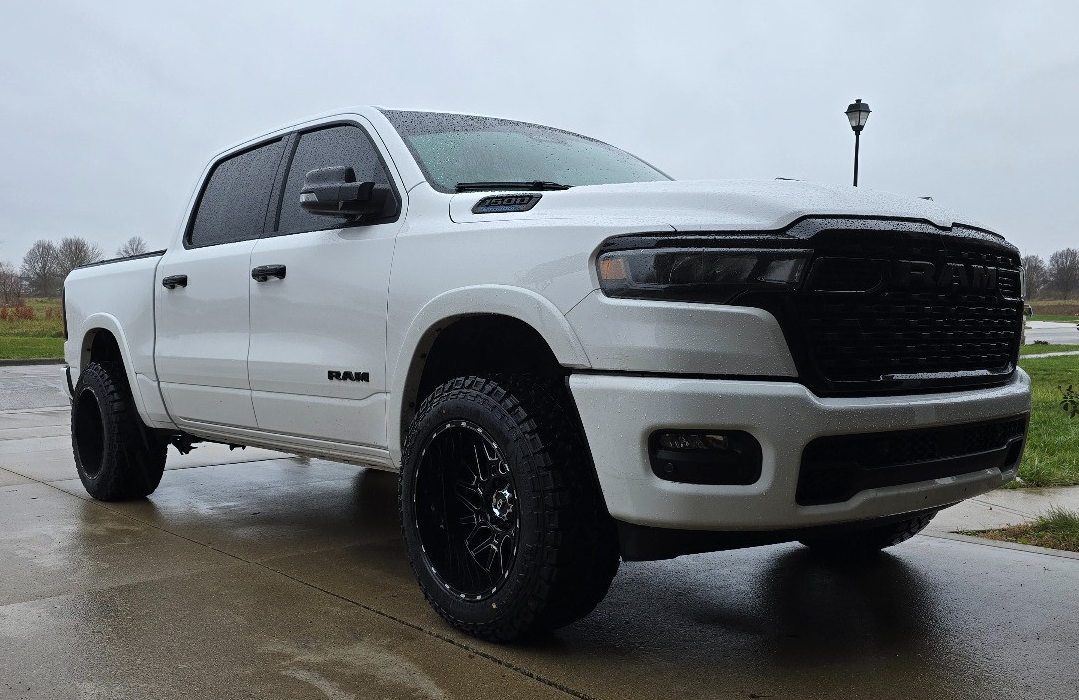
Half tons are the easiest and cheapest platform to make look aggressive. A leveling kit and a 33 or 35 inch tire on a wheel with some negative offset changes the whole truck for the least money of any class. If you want the look without the diesel payment, this is where you start.
3/4 Ton Trucks: F-250, Silverado 2500HD, Ram 2500
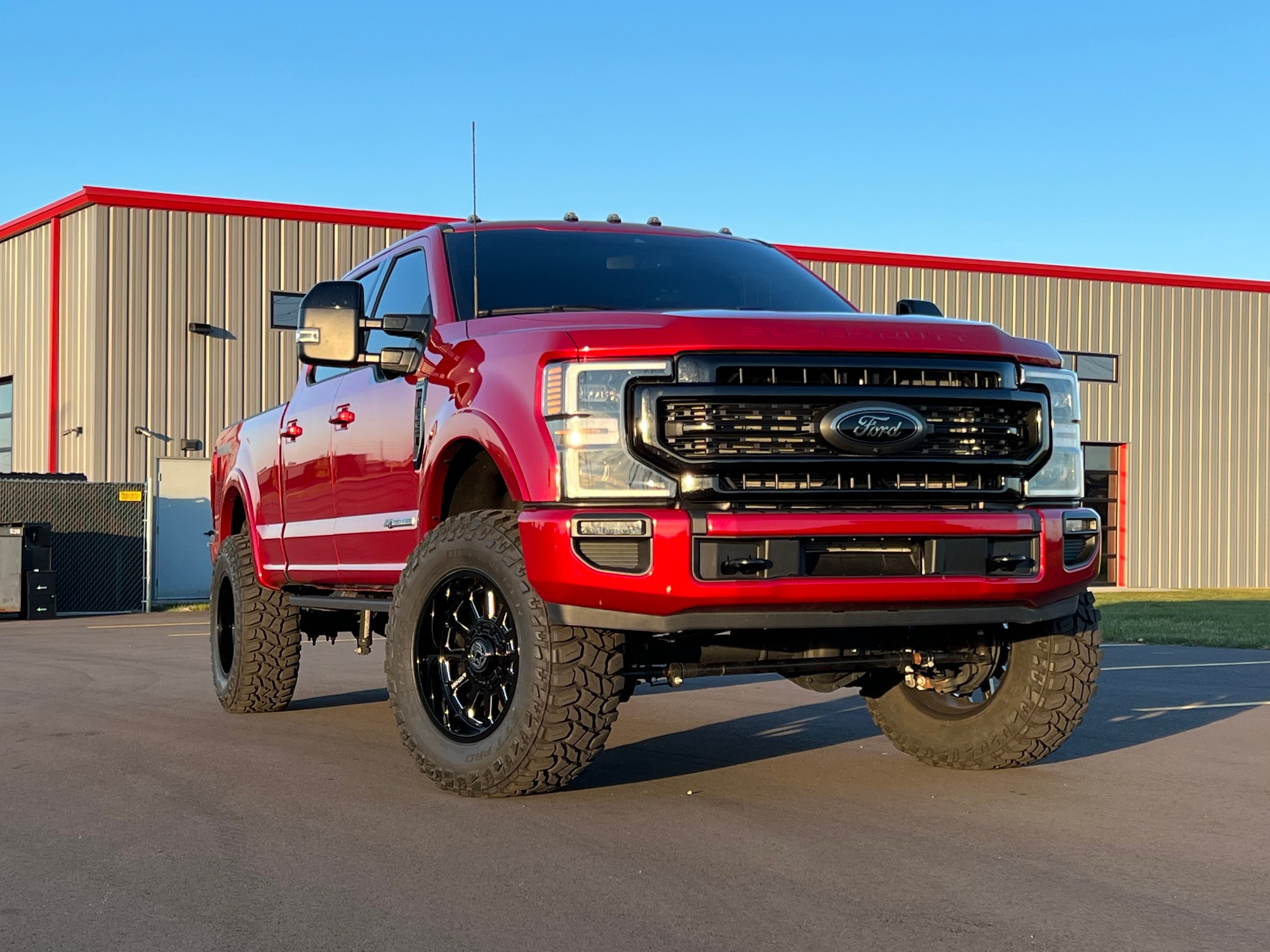
Three-quarter tons are where Super Duty and Heavy Duty trims begin. This is where capability and body size both start to climb.
Payload and towing
About 3,000 to 4,300 pounds of payload and 15,000 to 22,000 pounds of towing. Fifth wheel numbers go higher. This is a real tow rig.
Gas vs diesel
Both are legit here. The big gas engines (7.3 for Ford, 6.6 for GM, 6.4 for Ram) cost less up front and are simpler to own. The diesels (Power Stroke, Duramax, Cummins) win on torque, towing stability, and resale, and they cost thousands more to buy and more to maintain. If you tow heavy every week, diesel. If you tow sometimes, gas is the smarter money.
Ride and daily driving
Stiffer than a half ton, especially unloaded. Ram's coil rear helps. Diesel and gas engines get roughly the same mileage in this class. The truck sits taller, and parking gets more interesting. Still single rear wheel, so it drives like a big truck, not a wide one.
Built for
Guys towing a fifth wheel, a gooseneck, a heavy enclosed trailer, or running a truck for work and for everything else.
The build angle
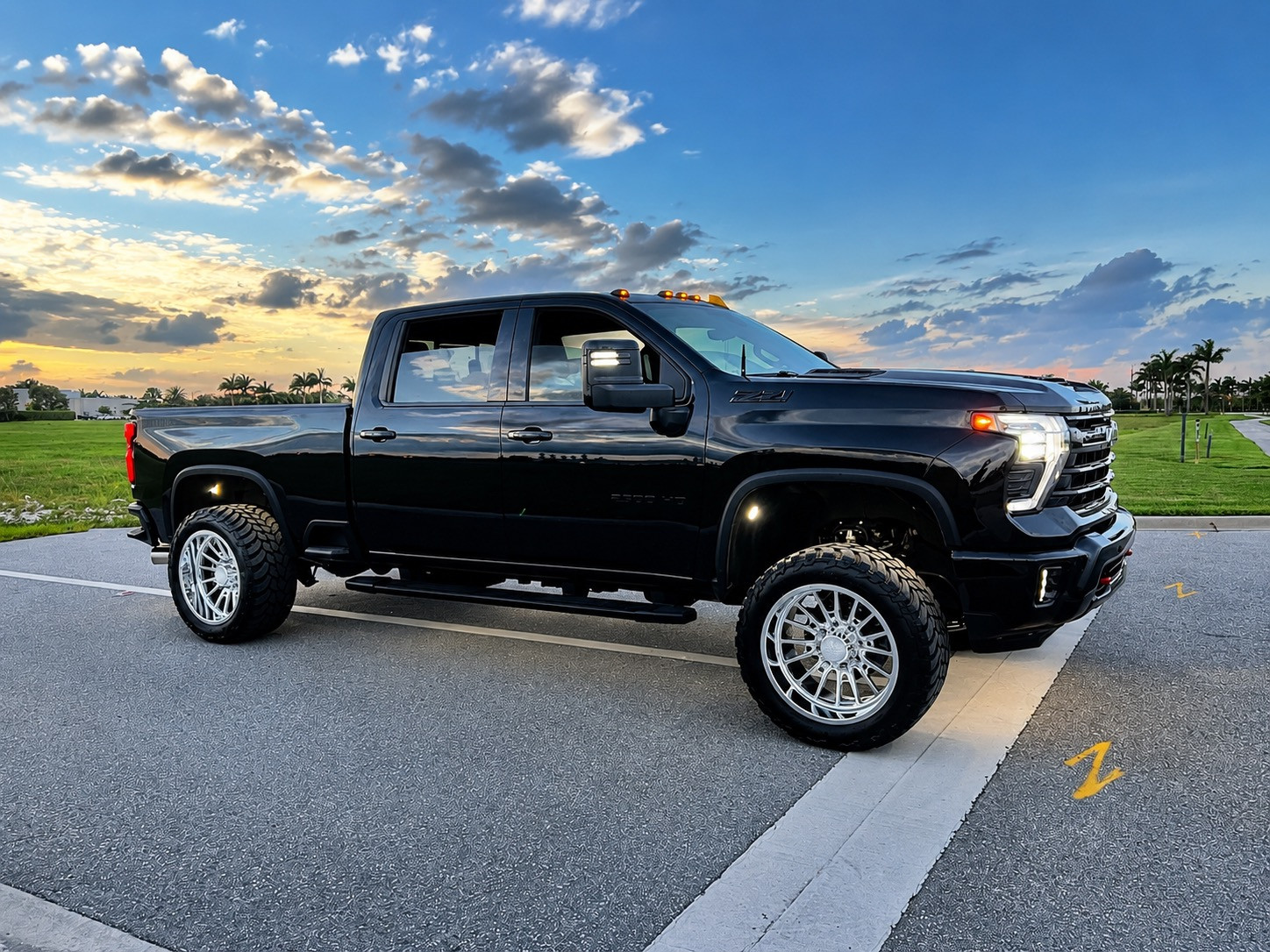
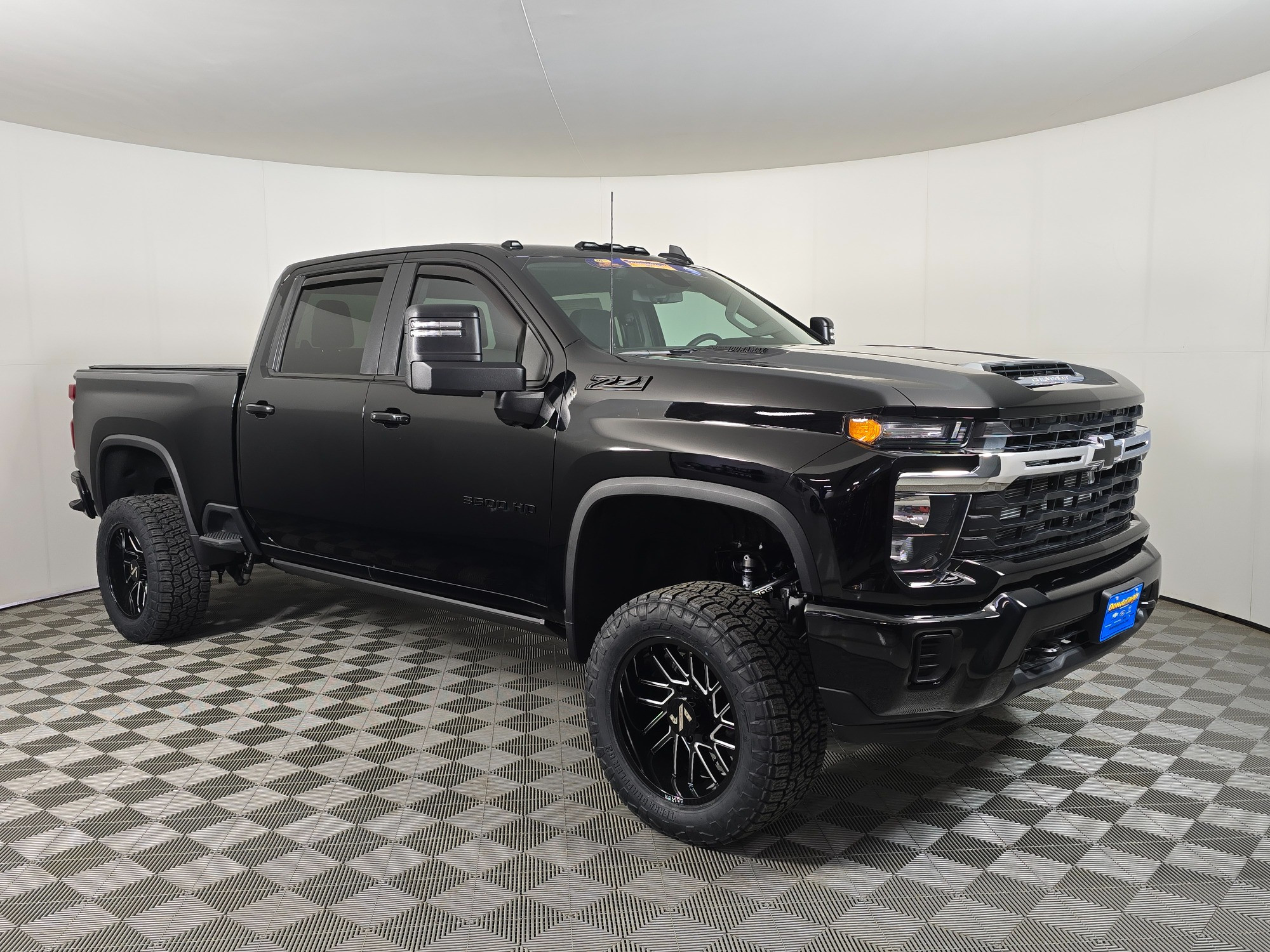
This is the sweet spot. HD trucks sit nose-down from the factory, about two inches of rake, so a leveling kit isn't just for looks. It fixes the stance and opens up 35s and 37s without touching your towing capacity. This is why the Ram 2500 is the truck you see most in the gallery. Our current-gen Ram 2500 HD fitment guide shows what works at stock, leveled, and lifted heights.
One Ton Trucks: F-350, Silverado 3500HD, Ram 3500
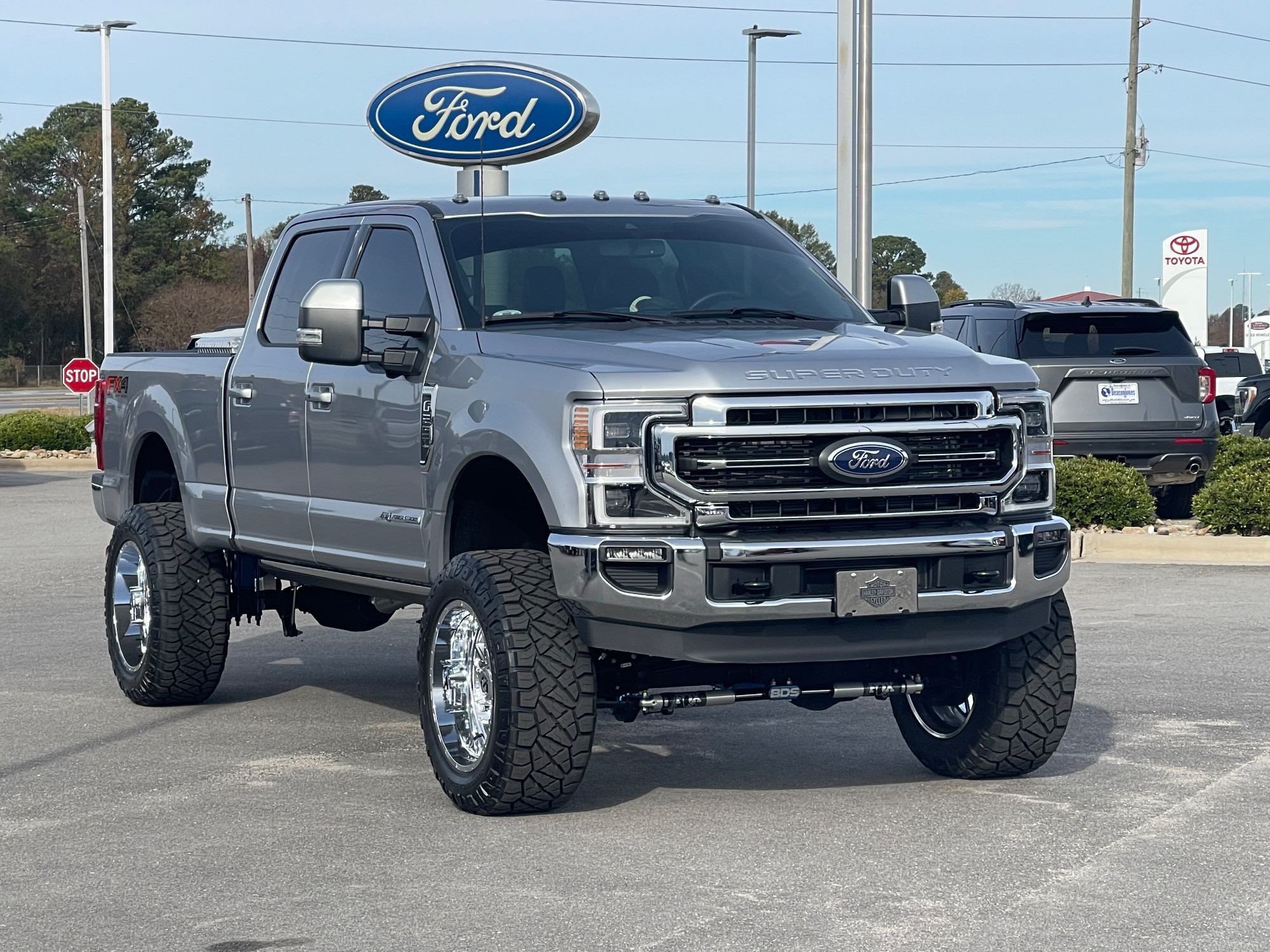
One tons offer the highest capability in the consumer segment. There are bigger trucks (450/4500, 550/5500, 650/6500) but those are commercial grade. That's where you'll see tow trucks, ambulances, and utility bodies.
Payload and towing
Single rear wheel one tons carry 4,000 to 5,500 pounds and tow into the mid 20,000s. Step up to a dually and payload pushes past 7,000 pounds and fifth wheel towing goes north of 35,000. These are the biggest pickups you can buy.
Gas vs diesel
Same engines as the 3/4 ton, but in this class the diesel is the default. If you needed a one ton, you probably need the torque.
Ride and daily driving
Firm. The one ton has heavier springs than the 2500 and rides like it when empty. A dually adds width, turning radius, and about 12 inches you'll notice in a drive-through. As a daily driver it's a commitment.
Built for
Hotshot hauling, big fifth wheels, horse trailers, equipment, anyone who tows near the top of a 3/4 ton's rating and wants margin.
The build angle
Fitment gets specialized here. A single rear wheel 3500 builds a lot like a 2500. A dually is a different animal. Dually wheel setups change the entire look of the truck, front and back, and the offsets are their own category. Done right, nothing on the road looks meaner. Done wrong, you're buying twice.
The Three Classes Side by Side
Same trucks, one table. Ranges depend on cab, bed, engine, and axle, so treat these as the field, not a spec sheet for any one truck.
| Class | Trucks | Payload | Towing | Rear wheel | Lug pattern | Sweet spot tire |
|---|---|---|---|---|---|---|
| Half ton | F-150, Silverado 1500, Ram 1500 | 1,300 to 2,400 lb | 7,000 to 13,000 lb | Single only | 6-lug | 33s to 35s on a level |
| 3/4 ton | F-250, Silverado 2500HD, Ram 2500 | 3,000 to 4,300 lb | 15,000 to 22,000 lb | Single | 8-lug | 35s to 37s on a level |
| One ton | F-350, Silverado 3500HD, Ram 3500 | 4,000 to 7,000+ lb | Mid 20,000s to 35,000+ lb | Single or dually | 8-lug (dually is its own setup) | SRW builds like a 2500; dually is its own category |
So Which One Do You Actually Need?
Start with the heaviest thing you'll tow, then add 20 percent for the stuff you'll pile in the bed and the trailer.
If your trailer sits comfortably inside the range, buy the smaller truck. It'll ride better, cost less, and still take an aggressive setup.
Class Changes Your Fitment Too
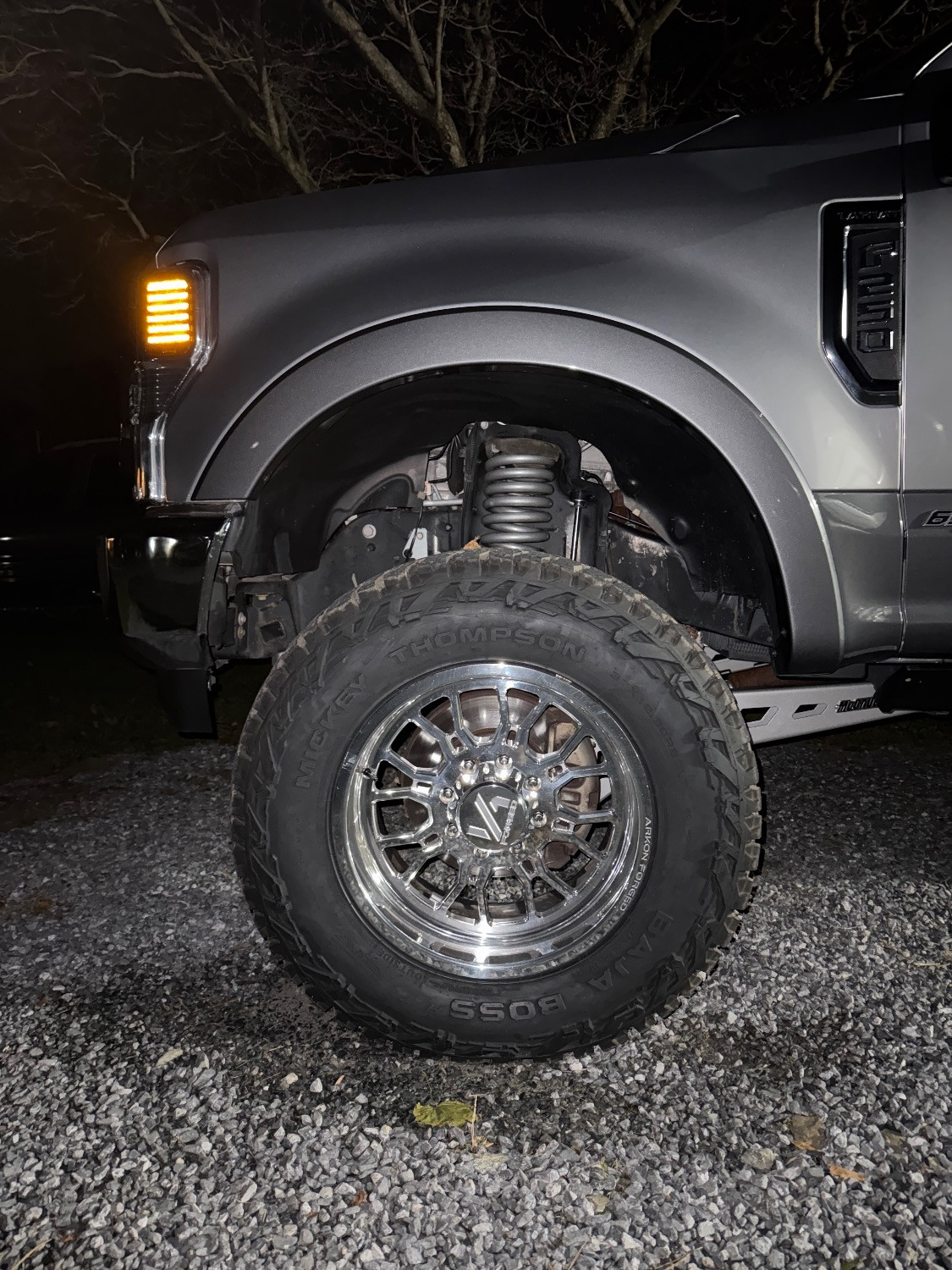
Half tons run 6-lug patterns. 3/4 and one tons run 8-lug, and the pattern changes by brand and sometimes by year. Offset ranges, hub bore, tire load ratings, and what clears without rubbing all shift by class. The wheel that looks perfect on a Ram 1500 won't bolt to a Ram 2500, and a dually wheel won't work on anything else.
See Your Class of Truck Built Out
The fastest way to figure out what fits is to look at trucks that already did it. Pull up the fitment gallery, filter by your truck, and see real owner builds with the exact wheel, tire, and lift listed. Then run your year, make, and model through the fitment tool to see what clears on your setup.
And if the build's bigger than the budget this month, financing lets you do it right the first time and pay over time. Build it right. See it first. Trust the fit.
Truck Class FAQs
Does half ton, 3/4 ton, and one ton still mean payload?
No. The names came from payload ratings decades ago and never got updated. Today a half ton F-150 can carry well over 2,000 pounds and a one ton dually can carry more than three tons. Treat them as size classes: 150/1500, 250/2500, and 350/3500.
Do I need diesel in a 3/4 ton?
Only if you tow heavy every week. The big gas engines cost less up front and are simpler to own. Diesel wins on torque, towing stability, and resale, but costs thousands more to buy and more to maintain.
Will half ton wheels fit a 3/4 ton?
No. Half tons run 6-lug patterns and 3/4 and one tons run 8-lug. Offset ranges, hub bore, and tire load ratings all change by class too, so a wheel built for a Ram 1500 won't bolt to a Ram 2500.
Does a leveling kit hurt towing capacity on an HD truck?
A leveling kit removes the factory nose-down rake on a 2500 or 3500 and opens up room for 35s and 37s. It does not change your rated towing capacity.