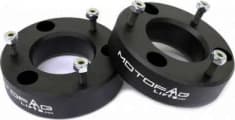
Custom Offsets carries wheels and tires, suspension lift kits, performance upgrades, and exterior and interior accessories with verified fitment for the 2010 Ford F-150. Real builds, proven setups, no guesswork.
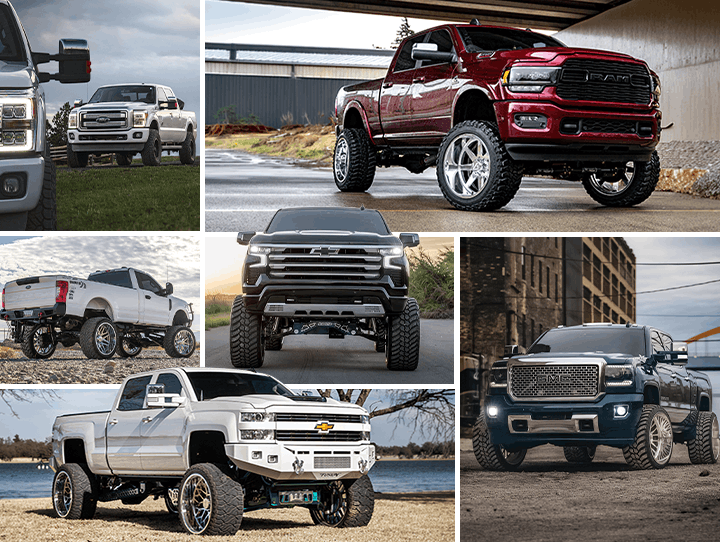
Wheels, tires, and suspension — the complete package for your build. From leveling kits to 12” lifts, paired with the wheels and tires to match. Every setup backed by guaranteed fitment.
See what other owners are running on their 2010 Ford F-150 – real fitment data from real trucks.
No scripts. No call centers. Our team builds and drives the same trucks you do — every recommendation comes from real-world experience. We’re not selling you a part, we’re helping you build your truck.



The 12th-generation F-150, produced from 2009 through 2014, is one of the most popular platforms in our customer gallery and for good reason. Ford updated the full-size truck formula with Super Duty-inspired styling, a wide range of cab and bed configurations, and a serious engine lineup that includes the twin-turbocharged 3.5L EcoBoost V6, the 5.0L Coyote V8, the 6.2L V8, the naturally-aspirated 3.7L V6, and carryover 4.6L and 5.4L V8 options. The 2011 model year brought a complete engine refresh and the debut of the EcoBoost, making this generation a turning point for the F-150. It also introduced the SVT Raptor for 2010, a factory-built off-road machine that shares the platform but runs its own long-travel suspension and 315/70R17 tires from the factory. Available as a Regular Cab, SuperCab, or SuperCrew, in RWD, 4WD, and AWD configurations, this generation covers everything from a base XL work truck to the luxury Platinum and Limited trims. The 6x135 bolt pattern is shared with the Ford Expedition, Lincoln Navigator, Ford Bronco, and F-150 Lightning, which means aftermarket wheel selection is deep and well-documented.
A leveling kit raises the front of the 2010 F-150 to eliminate the factory front rake, bringing the nose up level with the rear. Ford ships these trucks with the front sitting lower than the bed for payload and tow squat compensation, and a leveling kit corrects that. The result is a cleaner, more aggressive stance and a little extra front-tire clearance that opens the door to a larger wheel-and-tire package. Most builders running a leveling kit step up to 20-inch wheels and 33-inch tires, with offsets running from a mild +12 down to a more aggressive -44. Minor plastic trimming is common at this height, and a slight rub at full steering lock is something to plan for on the more aggressive offset choices. Leveling kits are the most common first move on this platform and the results show up across thousands of builds in Our Gallery.
A 3 to 4 inch suspension lift opens the envelope further, adding new shocks matched to the added height and giving the truck a noticeably taller stance. At this height, 33-inch tires remain the most common choice, with 35-inch tires at the aggressive edge of what fits. Wheel diameters from 18 to 22 inches all work here. Offsets run from near zero down to around -51, with most builders landing around -24 for a balanced poke. The same minor plastic trimming story applies at the common 33-inch tire size, and the 35-inch top of the range fits harder and needs more attention. Many full kits at this height often include geometry-correction hardware to restore front-end angles after the added height.
A 6-inch suspension lift is where the 2010 F-150 starts looking like a serious build. At this height, 35-inch tires are the most common choice, with 37-inch tires at the aggressive edge. Wheel diameters spread from 18 to 24 inches, and offsets get aggressive, with most builders running around -44 and the range extending from -12 down to -76 for serious poke. The 20x12 -44 on 35x12.50R20 and the 22x12 -44 on 35x12.50R22 are the setups our customers reach for most at this height. Minor plastic trimming is still common even at 6 inches, and a slight rub at full lock is something to expect on the deeper offset choices. Full kits at this height typically include new shocks, and many include upper control arms or other geometry-correction hardware to keep the front end dialed in.
Every engine in the 2010 F-150 lineup responds to a cold air intake. On the 3.5L EcoBoost, a cold air intake sharpens throttle response and lets the turbos spool with a more pronounced induction sound under boost. On the 5.0L Coyote V8, the intake note opens up and the engine breathes more freely through the rev range. The 6.2L V8 gets a deeper, more authoritative induction sound with a freer-flowing intake. The 4.6L and 5.4L V8s benefit from the same improved airflow. A cold air intake is one of the cleanest bolt-ons on this platform: no tuning required to run it, and the improvement in throttle feel is noticeable from the first drive.
A cat-back exhaust replaces everything downstream of the catalytic converter, leaving the cat itself in place. On the 5.0L Coyote, the result is a deeper, more aggressive V8 tone that matches the truck's presence without crossing into drone territory on the highway. The 6.2L V8 gets an even more commanding exhaust note, the kind that announces the truck before it arrives. The 3.5L EcoBoost takes on a sportier, more turbocharged character with a freer-flowing system behind the cat. The 4.6L and 5.4L V8s both respond well, picking up a fuller tone and freer breathing. Pairing a cat-back with a cold air intake and a supporting ECU calibration gets the most out of the combination across all engine options.
Beyond intake and exhaust, the 2010 F-150 supports a solid range of bolt-on upgrades. Throttle body spacers improve airflow on the naturally-aspirated V6 and V8 engines. On the EcoBoost, an intercooler upgrade helps manage charge temps under sustained boost. Differential upgrades and ring and pinion gear changes are popular on 4WD builds, especially when larger tires change the effective gear ratio and the truck needs to be re-geared to restore performance and fuel efficiency. Upgraded brake rotors and pads are a smart addition on any build running larger-than-stock tires, where the added rotating mass increases stopping distances and brake load. Coil packs and spark plugs are high-value maintenance-level upgrades that keep the ignition system sharp, especially on higher-mileage examples of this generation.
On the 2010 F-150, lighting and exterior work is where the build's character comes together: show-presence lighting for night stance, functional lighting for trail and work utility, and exterior upgrades that match the truck's intent from the front bumper to the bed.
For a show build, the 2010 F-150 responds well to LED headlight and tail light upgrades, including projector retrofits and halo or sequential signal conversions that modernize the look of this generation's Edge/Expedition-inspired headlight design. Grille-integrated lighting and amber DRL accents add daytime presence. Underbody lighting shows off the suspension hardware, painted diff covers, and big brakes underneath at a show or meet. Wheel-ring accent lights add another layer of visual character at night. For the off-road and trail build, a bumper-mounted LED light bar throws serious forward light for night driving, and ditch lights mounted at the A-pillars cast focused light to the sides for trail navigation. Pod lights and fog light upgrades round out the functional lighting package for builders who actually use the truck after dark on unpaved roads. Rock lights serve the trail build by illuminating the terrain underneath the truck.
On the exterior, the 2010 F-150 wears aftermarket front bumpers well, with options ranging from appearance-focused replacements that sharpen the front end to winch-mount bumpers built for off-road recovery. Aftermarket grilles are a popular and straightforward upgrade that changes the face of the truck. Fender flares extend coverage past the factory bodyline to catch the rocks and road debris that wider tires kick up, protecting the paint and body. Running boards and nerf bars add step access on a leveled or lifted truck. Bed covers, bed racks, and bed storage solutions keep the cargo area organized and protected. Hood upgrades are available for builders who want a more aggressive front profile. On the interior, all-weather floor liners and rear cargo liners are the first practical upgrade for any working truck. Seat covers protect the factory upholstery and are available in materials that hold up to daily use. Interior trim accents and dash covers let builders personalize the cabin. Power steps are a popular add-on on lifted builds where the step-in height increases with the suspension.
Good: A leveling kit raises the front to eliminate factory rake and level the truck front to rear, with new hardware matched to the added height. Better: A 3 to 4 inch suspension lift with upgraded shocks and geometry-correction hardware for a noticeably taller stance and improved front-end angles. Best: A 6-inch suspension lift with new shocks, upper control arms or equivalent geometry correction, and the full complement of supporting hardware for a show-truck or capable off-road stance.
Good: A cold air intake for improved throttle response and induction sound on any engine in the lineup. Better: Cold air intake paired with a cat-back exhaust for a stronger sound and freer breathing across the rev range. Best: Full intake and exhaust combination with drivetrain upgrades, re-gearing for larger tires, upgraded brakes, and a supporting ECU calibration to optimize the whole package.
Good: Aftermarket grille, running boards or nerf bars, and a bed cover for a clean, practical upgrade over stock. Better: Front bumper replacement, fender flares, LED headlight and tail light upgrades, and underbody or grille-integrated accent lighting for show presence. Best: Full exterior package with a winch-mount or appearance front bumper, hood upgrade, fender flares, full lighting suite including light bars or ditch lights for the off-road path or show-presence lighting for the show path, and rocker protection.
Good: All-weather front and rear floor liners and seat covers for daily protection. Better: Floor liners, seat covers, interior LED lighting, and cargo management with bed storage or a bed liner. Best: Full interior package with premium seat protection, complete floor coverage, interior trim accents, dash covers, and power steps for lifted builds.
Good: 20x9 +0 with 285/55R20 on stock suspension, a clean flush fitment that almost always bolts on without modification and most owners report no rubbing. Better: 20x10 -24 with 33x12.50R20 on a leveling kit, a sharp aggressive stance where most builders run minor plastic trimming and a slight rub at full lock is something to plan for. Best: 20x12 -44 with 35x12.50R20 on a 6-inch lift, the setup our customers reach for most at this height, with minor plastic trimming common and a slight rub at full lock on the deeper offset.
Good: Clean, practical, and noticeably better than stock without going all-in. The truck looks intentional and drives great every day. Better: Aggressive street presence with a stance that turns heads. Weekend-capable and daily-driven, the kind of build that gets noticed in traffic and at the pump. Best: Show-truck intent. Maximum visual presence, built to be seen. This is the build people circle at meets and screenshot in Our Gallery.
It depends on your goal. Builders chasing stance and presence usually start with wheels and tires or a leveling kit, since those changes are immediately visible and set the direction for everything else. Builders focused on capability often start with suspension. Performance-first builders go intake and exhaust first. There is no single right order. Start with the category that matters most to your build and work outward from there.
Yes. Get pre-approved before you start building your cart so you know your budget going in. Pre-approval is fast and does not require you to have a specific build in mind. Once you know what you are approved for, you can put together the full package, suspension, wheels and tires, lighting, accessories, and check out with confidence. Spreading the cost across a build makes it easier to do it right the first time instead of piecing it together over multiple orders.
Both. Our team handles fitment questions, what clears at a given lift height, which offset works with your cab configuration, whether a specific tire size needs trimming, and install questions, how mods stack together, what hardware you need, the right sequence, and common gotchas on this generation. The 2010 F-150 is one of the most documented platforms in Our Gallery, so we have real build data to back up every recommendation.
Because we specialize in trucks and we own the fitment. Our Gallery has thousands of real 2010 F-150 builds submitted by our customers, with real specs, real photos, and real fitment outcomes. When you see a 20x12 -44 on 35-inch tires over a 6-inch lift in Our Gallery, that is a documented, repeatable setup, not a guess. We sell mounted-and-balanced wheel and tire packages ready to bolt on, and our team backs every fitment recommendation with real build data from trucks like yours.