Custom Offsets carries wheels and tires, suspension lift and leveling kits, performance upgrades, and exterior and interior accessories verified to fit the 2016 Tahoe. Every recommendation is backed by real builds from our community so you know exactly what fits before you buy.
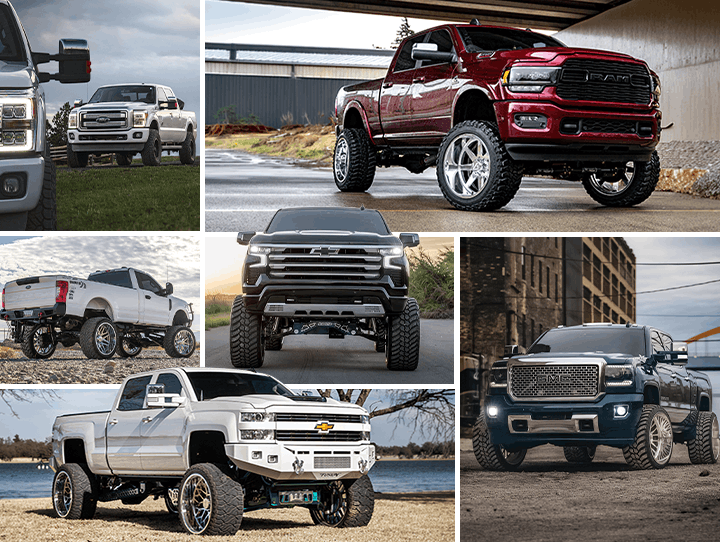
Wheels, tires, and suspension — the complete package for your build. From leveling kits to 12” lifts, paired with the wheels and tires to match. Every setup backed by guaranteed fitment.
See what other owners are running on their 2016 Chevrolet Tahoe – real fitment data from real trucks.
No scripts. No call centers. Our team builds and drives the same trucks you do — every recommendation comes from real-world experience. We’re not selling you a part, we’re helping you build your truck.



The fourth-generation Chevrolet Tahoe ran from 2015 through 2020 on the same architecture underpinning the Silverado 1500 of that era. It arrived as a full redesign with a more efficient direct-injected EcoTec3 V8 powertrain, aluminum hood and liftgate panels to trim weight, and a significantly updated interior with fold-flat second- and third-row seats. Engine choices span the 5.3L V8 in both flex-fuel and gasoline configurations and the 6.2L V8, the latter becoming available on the Tahoe LTZ and RST starting in 2018 after previously being exclusive to the Yukon Denali. The trim lineup runs from the work-ready LS and LT through the LTZ and Premier at the top, plus the PPV and SSV police-package variants. Both 4WD and RWD drivetrains were offered. The 6x5.5 bolt pattern is shared across a wide family of full-size GM trucks and SUVs, which means the aftermarket wheel selection is enormous. Enthusiasts love this generation for its combination of full-size presence, a stiff body-on-frame platform that responds well to lift kits, and a community of builders who have documented thousands of setups across every suspension configuration.
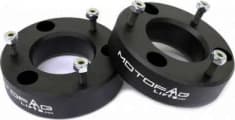
A leveling kit raises the front of the Tahoe to eliminate the factory nose-down rake and bring the front up level with the rear. That correction opens a little extra front-tire clearance and gives the truck a more planted, purposeful stance without changing the ride height dramatically. Most builders run a 2-inch leveling kit as the first move; a 2.5-inch kit is a step up for those who want a touch more clearance. At this height, 20- and 22-inch wheels are the most common choice, and tire sizes climb to 33 inches. The most popular leveled setup our customers reach for is a 22x12 at -44 offset on 33x12.50R22 tires, though it is worth knowing that most of those builds need some fender or metal work to run that aggressive a wheel. A cleaner daily fit at this level is a 20x10 at -24 or -25 offset on a 275/60R20 or 305/55R20, which bolts on with far less drama. Offsets across leveled builds typically run from a mild +18 down to an aggressive -44, with most landing around -18. TPMS sensors from the factory wheels transfer to new aftermarket wheels or new sensors can be installed.
A 3- to 4-inch suspension lift is where the Tahoe starts to look seriously capable. The kit replaces the factory shocks and struts with longer units matched to the new ride height and often includes geometry-correction hardware to keep the front end tracking properly. At this height, 20- and 22-inch wheels remain the most common choice, and the tire envelope opens to 33 inches on the conservative end with 35-inch tires becoming reachable at the aggressive edge. A 22x9.5 at +20 offset on 35x12.50R22 tires is a documented setup at the 4-inch level, though 35s at this height fit harder than 33s and most need minor trimming with a touch of rub at full lock. Offsets across 3- to 4-inch builds typically run from around +20 down to -44, with most landing near -12. The 6.2L V8 models that came with the LTZ and RST packages from 2018 onward are a natural fit for this build tier, where the extra power pairs well with the added visual presence.
A 6-inch suspension lift is where the 2016 Tahoe becomes a genuine show-truck platform. Full lift kits at this height include new shocks valved for the added travel, and many kits include upper control arms to correct ball-joint angle and restore proper front-end geometry. Wheel diameters step up to 20 through 24 inches, and tire sizes run 33 to 35 inches across most builds, with 37-inch tires showing up on the boldest setups. The setup our customers reach for most at this height is a 20x12 at -44 offset on 33x12.50R20 tires, a combination that most builders run with minor plastic trimming, though some fit it clean and a slight rub at full lock is common. Offsets get aggressive here, with most builds landing around -44 and the typical range running from around +20 down to -76 for serious poke. For builders chasing the full show-truck look, a 26x14 at -76 on 37x13.50R26 tires over a 7-inch lift is a documented setup in Our Gallery, proof of how far this platform can be pushed. At this tier, a rear spacer is worth considering to match the rear track to the wider, more aggressive front stance.
Both the 5.3L and 6.2L EcoTec3 V8 engines respond well to a cold air intake. Replacing the factory airbox with a high-flow intake moves the filter to a cooler location in the engine bay, reduces intake restriction, and opens up the induction sound under hard acceleration. The result is a more responsive throttle feel and a noticeable improvement in how the engine breathes at higher RPM. The 6.2L in particular rewards the upgrade with a more aggressive induction note that matches the truck's presence.
A cat-back exhaust replaces everything downstream of the catalytic converter, leaving the cat itself in place. On the 5.3L, the result is a deeper, more aggressive V8 tone that carries through the cabin and out the back without being obnoxious at cruise. The 6.2L steps up to a genuinely commanding exhaust note that suits the truck's size and stance. Both engines benefit from reduced backpressure and freer flow, and the improvement in sound alone is enough reason for most builders to make this one of their first performance moves.
Beyond intake and exhaust, the EcoTec3 platform supports a range of bolt-on upgrades. Throttle body spacers and upgraded fuel components help the engine breathe and deliver fuel more efficiently. Valve train components and camshaft upgrades are available for builders who want to go deeper into the engine. A performance tune that supports the combination of bolt-ons gets the most out of the setup, optimizing fueling and timing to match the modifications. Differential and ring-and-pinion gear upgrades are worth considering for builders running larger tires, keeping the drivetrain in the right ratio for the new rolling diameter.
On a lifted 2016 Tahoe, lighting and exterior work is where the show-truck character comes together: upgraded headlights and accent lighting for night presence, a reworked front end to match the stance, and interior protection for daily use.
For the show build, the Tahoe's front end is a strong canvas for projector or LED headlight retrofits that sharpen the truck's face and add a more aggressive look at night. Sequential turn signals and LED tail light upgrades tie the rear of the truck to the same modern aesthetic. Underbody lighting shows off the suspension hardware underneath at meets, and grille-integrated accent lighting adds presence at the front. For builders taking the Tahoe off-road or onto trails, a bumper-mounted LED light bar delivers serious forward throw, and ditch lights mounted at the A-pillars cast focused light to the sides where the headlights don't reach. Rock lights mounted under the rocker panels serve trail utility, illuminating the ground around the tires when the terrain gets technical.
On the exterior, a replacement front bumper changes the character of the truck immediately, whether that is a cleaner appearance-focused fascia for the show build or a winch-capable bumper with recovery points for the off-road path. Fender flares extend coverage over wider tires and protect the body from rocks and road debris the tires kick up. A custom grille swap is one of the fastest ways to differentiate the Tahoe's face from the factory look. Power running boards are a practical addition given the Tahoe's ride height, especially on lifted builds where the step up into the cab grows considerably. Mud flaps protect the lower body on daily-driven trucks. Inside, custom-fit floor liners protect the carpet from mud, water, and wear, and cargo liners keep the rear cargo area clean. Seat covers protect the factory upholstery and let builders personalize the interior. Dash covers and interior trim kits round out the cabin for builders who want a finished look front to back.
Good: A 2-inch leveling kit with the factory shocks, eliminating the front rake and opening room for a larger wheel-and-tire package. Better: A 3- to 4-inch suspension lift with new shocks matched to the added height and geometry-correction hardware to keep the front end dialed in. Best: A 6-inch or taller full suspension lift with new shocks, upper control arms, and a rear spacer to match the rear track to the wider front stance.
Good: A cold air intake for improved throttle response and induction sound. Better: A cold air intake paired with a cat-back exhaust for a stronger V8 tone and freer flow through the whole system. Best: Intake, exhaust, throttle body, valve train upgrades, and differential or ring-and-pinion gear work for builders running larger tires, with a supporting ECU tune to optimize the full combination.
Good: A grille swap and LED tail light upgrade for a sharper factory-plus look. Better: A replacement front bumper, fender flares, power running boards, and LED headlight retrofits that match the truck's lifted stance. Best: A full exterior package with a winch-capable or appearance bumper, custom hood, fender flares, underbody lighting, grille-integrated accent lighting, and a complete LED lighting suite front and rear.
Good: Custom-fit front and rear floor liners and a cargo liner to protect the factory interior. Better: Floor liners, seat covers, and a dash cover for a more complete interior protection package. Best: Full interior protection with seat covers, floor liners, cargo liner, interior trim accents, and upgraded audio or head unit for a finished cabin.
Good: 22x9 +35 with 285/45R22 tires on stock suspension, a clean factory-plus look that almost always bolts on without modification. Better: 20x10 -24 with 275/60R20 tires on a leveling kit, a more aggressive stance that bolts on cleanly for most builders with a slight rub at full lock being the exception rather than the rule. Best: 20x12 -44 with 33x12.50R20 tires on a 6-inch suspension lift, a wide, deep-poke setup where most builders run minor plastic trimming and expect a touch of rub when cranking the wheel all the way.
Good: Clean, confident, and daily-capable. The truck looks intentional without being loud about it. Better: Aggressive street presence that turns heads on the commute and holds its own at any meetup. Best: Full show-truck intent. Built to be seen, documented across thousands of builds in Our Gallery, and impossible to ignore in a parking lot.
It depends on your goal. Builders chasing stance and presence often start with wheels and tires or a leveling kit because the visual payoff is immediate. Builders who want capability first go straight to a suspension lift. Performance-focused owners start with intake and exhaust. There is no single right order.
Yes. Get pre-approved before you start building your cart so you know your budget going in. Pre-approval is fast and does not affect your credit score. Once you know what you are working with, you can put together the full build, suspension, wheels and tires, performance, accessories, all of it, and check out with a payment plan that fits. Do not let budget be the reason you build half a truck.
Both. Our team fields fitment questions every day: which offset clears the factory brake caliper, what tire size fits a 3-inch lift without trimming, how a leveling kit changes the front-end geometry. We also handle install-side questions: how mods stack together, what hardware you need, the right sequence for a lift install, and the common gotchas on the 2015-2020 Tahoe. Call or message us and we will walk you through it.
Because we specialize in fitment. Our Gallery has real fourth-gen Tahoe builds documented across every suspension configuration, so when we tell you a 20x10 -24 with 275/60R20 tires works on a leveling kit, it is because our customers are running exactly that setup. We sell mounted-and-balanced wheel and tire packages that ship ready to bolt on, and our team knows the fourth-gen Tahoe well enough to catch fitment problems before they become expensive mistakes.