Custom Offsets carries wheels and tires, suspension, performance upgrades, and exterior and interior accessories for the 2020 Dodge Charger, all backed by verified fitment and thousands of real customer builds in Our Gallery.
See what other owners are running on their 2020 Dodge Charger – real fitment data from real cars.
No scripts. No call centers. Our team builds and drives the same cars you do — every recommendation comes from real-world experience. We’re not selling you a part, we’re helping you build your car.



The seventh-generation Dodge Charger ran from 2011 through 2023 on the LD platform, a refined evolution of the LX architecture that debuted with the sixth-generation car in 2006. This is the generation that turned the Charger into a genuine enthusiast platform: a full-size rear-wheel-drive sedan with a wide engine lineup, a body that wears aftermarket wheels and lowered suspension exceptionally well, and a trim ladder that runs from the base V6 daily driver all the way to the supercharged SRT Hellcat Widebody. Engine options span the 3.6L Pentastar V6 in both flex-fuel and gas configurations, the 5.7L HEMI V8, the 6.4L 392 HEMI, and the supercharged 6.2L HEMI in Hellcat trim. AWD is available on V6 models, while the V8 and SRT variants are RWD. The Widebody trims introduced from 2020 onward run factory 20x11 wheels at -3 offset on 305/35R20 tires, a setup that signals exactly where the platform's aggressive fitment ceiling sits. Whether you're building a clean street presence or chasing a dialed show stance, the Charger's proportions and platform depth make it one of the most rewarding cars to build in the segment.
Running the factory suspension, the Charger is already a capable platform for an aggressive wheel and tire setup. Most builders on stock suspension run 20-inch wheels in the +13 to +35 offset range, and the car bolts up clean with almost no rubbing reported across thousands of documented builds. This is the right starting point for anyone who wants a sharp look without touching the ride height, and it's a fully valid build path on its own. The factory suspension geometry is well-sorted, and the stock ride height gives you a clean, planted stance right out of the gate.
Lowering springs are the most accessible way to drop the Charger's ride height and sharpen its stance. A set of performance lowering springs typically drops the car 1 to 1.5 inches, reducing wheel gap and giving the body a more aggressive, ground-hugging profile without sacrificing daily drivability. The spring rate is usually stiffer than stock, which tightens up body roll and improves cornering feel. Builders on lowering springs run the same 20-inch wheel range as stock, and the setup bolts on clean across the board. It's the right move for a driver who wants a noticeably lower stance and a sportier feel without committing to a full coilover setup.
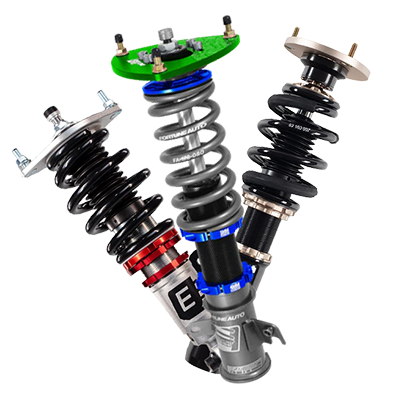
Adjustable coilovers give you full control over ride height, spring rate, and damping, letting you dial in exactly how low the Charger sits and how it handles. A quality coilover setup can drop the car 1.5 to 3 inches depending on the valving and spring rate you choose, and the adjustability means you can fine-tune the stance for a show setting or back it off for daily driving. Builders on coilovers commonly run 20-inch wheels in the +15 to +38 offset range, and the setup is well-documented across Our Gallery with clean fitment reported on the vast majority of builds. For builders who want the most control over how the car sits and drives, coilovers are the definitive choice.
Air suspension takes the Charger's stance game to another level entirely. With an air management system and adjustable bags or struts, you can raise the car for daily driving and drop it to show height at the push of a button. Builders on air suspension run some of the most aggressive setups documented in Our Gallery, including wide 20-inch wheels at offsets down to +0 and 305/35R20 tires that push the fitment envelope hard. The tradeoff is install complexity and cost, but for builders who want the ability to go as low as possible while keeping the car drivable, air suspension is the top of the build path. Most setups bolt on clean, though the most aggressive combos at full drop will need some trimming.
A cold air intake is one of the first and most rewarding bolt-ons on any Charger engine. By routing the intake away from engine heat and drawing in cooler, denser air, a cold air intake sharpens throttle response and adds a noticeable induction sound under hard acceleration. On the 5.7L and 6.4L HEMI V8s, the intake note becomes a real part of the driving experience. The 3.6L Pentastar V6 responds well too, with a crisper throttle feel that makes the car feel more alive in daily driving. No tuning is required for a basic intake swap, though pairing it with other bolt-ons and a supporting calibration gets the most out of the combination.
The Charger's exhaust is where the build gets loud in the best way. A cat-back exhaust system, replacing everything downstream of the catalytic converter while leaving the cats in place, is the legal and most popular route. On the 5.7L HEMI, a cat-back opens up a deeper, more aggressive V8 tone that carries through the cabin and out the quad tips. The 6.4L 392 and 6.2L Hellcat respond with an even more pronounced note, and the freer flow behind the cats lets the engine breathe better at higher RPM. The 3.6L V6 gets a sportier, more refined exhaust note that makes the car sound more purposeful. Performance headers are also available for the V8 variants and pair well with a cat-back for a more complete exhaust upgrade.
Beyond intakes and exhaust, the Charger platform supports a strong lineup of bolt-on performance upgrades. Brake kits and big brake kits are a high-value upgrade here, especially on V8 builds where the added stopping power matches the engine's output. Upgraded rotors and performance brake pads are a natural first step, with full big brake kit options available for builders who want maximum bite. Throttle body upgrades improve airflow into the intake manifold on the HEMI V8s. Performance tuners let you optimize fuel and ignition calibration to get the most out of your bolt-on combination. For builders chasing serious power, supercharger kits are available for the platform, and nitrous systems are documented as well. Oil system upgrades and valve train components round out the engine-bay build for high-output applications.
The Charger's long hood, wide stance, and aggressive roofline give it a strong visual foundation, and the right lighting and exterior work turns that foundation into a statement.
Depending on trim, the Charger left the factory with halogen or projector housings, so the right lighting upgrade depends on where you are starting. LED and projector headlight retrofits sharpen the front end's look and improve output over the factory halogen units. Sequential turn signals and LED tail light assemblies tie the rear end together and give the car a more modern, intentional look, especially at night when the wrap-around LED tail light design is already one of the car's signature features. For builders who want to go further, halo and DRL accent lighting adds a distinctive ring to the front end, and underglow lighting in the wheel arches and under the body gives the car serious show presence at night. Fog light upgrades are well-supported on this platform with a strong selection of fitment-verified options.
On the exterior, the Charger responds well to aero and body work. Front splitters, rear spoilers, and side skirts sharpen the car's already aggressive lines and give it a more track-ready or show-ready profile depending on the direction you take. Hood upgrades, including vented and heat-extractor designs, are popular on the V8 builds and add a functional-looking presence to the front end. Grille upgrades are a quick and high-visibility change that updates the front fascia. Paint protection film is a smart addition for any Charger that sees regular road use, protecting the front end from chips and road debris. Inside, the Charger's cabin is a strong platform for protection and comfort upgrades. Custom-fit floor liners front and rear protect the carpet on a car that gets driven hard. Seat covers in durable materials keep the interior looking sharp. Interior trim kits let you personalize the dash and door panels, and shift knobs are a small but satisfying touch on a car where the driver's connection to the drivetrain matters.
Good: A set of performance lowering springs drops the ride height 1 to 1.5 inches, tightens up body roll, and gives the Charger a noticeably more aggressive stance with minimal install complexity. Better: Adjustable coilovers with ride-height and damping control let you dial in the exact drop and spring rate you want, with the ability to tune the setup for street or show. Best: A full air suspension kit with adjustable bags or struts and an air management system gives you on-the-fly ride height control, the ability to go as low as possible for show, and a setup that supports the most aggressive wheel and tire combinations the platform can run.
Good: A cold air intake sharpens throttle response and adds induction sound, a clean first bolt-on for any engine in the lineup. Better: A cold air intake paired with a cat-back exhaust system opens up the full breathing and sound upgrade, with a noticeably more aggressive tone and freer flow across the RPM range. Best: A full bolt-on combination including intake, cat-back exhaust, performance headers, throttle body upgrade, and brake system upgrades, with a supporting ECU calibration to optimize the full combination and get the most out of every mod.
Good: Grille upgrade, paint protection film on the front end, and a set of license plate accessories for a clean, protected look. Better: Front splitter or aero kit, hood upgrade, sequential LED tail lights, and projector or halo headlight retrofit for a sharper, more intentional front and rear end. Best: Full aero package with front splitter, rear spoiler, side skirts, vented hood, full LED lighting retrofit front and rear, underglow accent lighting, and a body kit for a complete show-ready exterior.
Good: Custom-fit front and rear floor liners and seat covers to protect the cabin on a car that gets driven. Better: Floor liners, seat covers, interior trim kit for the dash and door panels, and interior LED lighting for a more personalized and polished cabin. Best: Full interior package with premium floor liners, seat covers, interior trim accents, ambient LED lighting, shift knob upgrade, and dash cover for a cabin that matches the exterior build.
Good: 20x9 +20 front and 20x10.5 +25 rear with 275/40R20 tires on stock suspension. This is the most popular setup our customers run on the Charger at stock ride height, and it bolts on clean with almost no rubbing reported. Better: 20x9 +20 front and 20x10.5 +22 rear with 275/40R20 tires on lowering springs. The same clean-fitting combo drops with the car and still bolts on clean across the board, with almost no rubbing reported. Best: 20x12 +0 with 305/35R20 tires on air suspension. This is the aggressive end of what our customers document on the Charger, a wide, deep-offset setup that pushes the fitment envelope. Most bolt on clean at ride height, but the most aggressive combos at full drop will need some trimming.
Good: A clean, planted daily driver with a sharper stance and a more purposeful look. Subtle but intentional, the kind of build that looks right everywhere. Better: A street-presence build with a real drop, aggressive wheel fitment, and a sound that matches the look. Noticeable everywhere, still drivable every day. Best: A show-focused Charger built to command attention. Slammed on air, wide wheels, full aero, and a cabin that matches the exterior. Built to be seen.
There's no single right starting point. Builders who want an immediate visual impact usually start with wheels and tires or a suspension drop. Builders focused on performance start with an intake and exhaust. If you want the full picture before spending anything, browse Our Gallery and filter by your suspension setup to see what real Charger owners are running. That gives you a clear target before you commit to a direction.
Yes. Get pre-approved before you build your cart so you know your budget going in. Pre-approval is fast and doesn't require you to have a specific order ready. Once you know what you're approved for, you can build the cart with confidence and check out on your terms. Spreading a full wheel and tire package or a suspension build over time makes the best setups accessible without waiting.
Our fitment team is here for both. On the fitment side, Our Gallery has thousands of documented Charger builds filtered by suspension setup, wheel size, and offset, so you can see exactly what fits before you order. On the install side, our team can walk you through what a specific combo requires, whether that's a sensor transfer for TPMS, torquing to your wheel and lug manufacturer's spec, or re-torquing after the first 50 to 100 miles.
We specialize in fitment. Every wheel and tire package we sell for the Charger is backed by verified fitment data and real customer builds in Our Gallery. You're not guessing whether a setup fits. You're seeing what Charger owners like you actually run, at the suspension height you're building to. We sell mounted and balanced wheel and tire packages ready to bolt on, and our team is here to back the fitment from the first question to the final install.