Custom Offsets carries wheels and tires, suspension, performance parts, and exterior accessories for the 1973 Ford F-100. Real fitment data from real builds, so you know exactly what fits your truck before you buy.
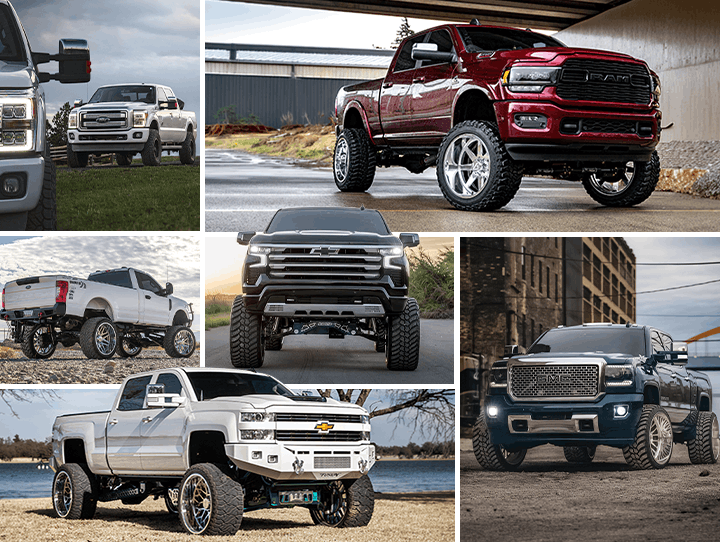
Wheels, tires, and suspension — the complete package for your build. From leveling kits to 12” lifts, paired with the wheels and tires to match. Every setup backed by guaranteed fitment.
See what other owners are running on their 1973 Ford F-100 – real fitment data from real trucks.
No scripts. No call centers. Our team builds and drives the same trucks you do — every recommendation comes from real-world experience. We’re not selling you a part, we’re helping you build your truck.



The sixth-generation Ford F-100 ran from 1973 through 1979 and represents the last great era of the original half-ton F-Series before the F-150 took over as the entry-level nameplate. Built on the same platform that debuted with the 1965 fourth-generation revision, this generation brought meaningful upgrades: front disc brakes, a larger cabin, full double-wall bed construction, and increased use of galvanized steel. It came as a standard cab pickup, extended cab, and cab-and-chassis configuration, with 4WD and RWD drivetrains available across the lineup.
Under the hood, the engine options ranged from the 3.9L and 4.9L inline-six to a lineup of V8s: the 5.0L, 5.8L, 5.9L, 6.4L, 6.6L, and the big 7.5L. The FE engine series was phased out in 1976, replaced by the more modern 335 and 385 series V8s. Trims ran from the base work-spec to the Ranger, Ranger XLT, and Ranger Lariat, giving buyers a wide range of factory equipment levels. For builders today, this generation is a blank canvas: a proven, body-on-frame platform with a massive aftermarket, a 5x5.5 bolt pattern shared with several other platforms, and a look that turns heads at every show.
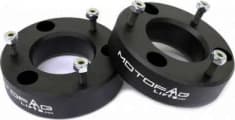
A leveling kit raises the front of the F-100 to eliminate the factory front rake and bring the nose up level with the rear. On a truck this age, that correction also opens a little extra front-tire clearance and gives the stance a cleaner, more intentional look. Leveling kits are the most straightforward first move for builders who want improved stance without a major suspension overhaul. Stock builds in our community almost always bolt on clean with no rubbing reported.
A 3-to-4-inch lift raises the whole truck and opens room for a larger wheel-and-tire package. At this height, new shocks matched to the added ride height are standard, and many builders add geometry-correction hardware to keep the front end tracking right. Builds we've documented at this tier run 33-inch tires and step into more aggressive offsets. Expect minor trimming on some setups, and a touch of rub at full steering lock is common.
A 6-inch suspension lift is where the 1973 F-100 becomes a full-blown show truck. At this height, longer shocks valved for the added ride height, often paired with upper control arm corrections to restore ball-joint geometry, are the foundation. Our customers running 6-inch lifts go straight to 22-inch wheels and 35-inch tires with deep negative offsets for serious poke. Most bolt on clean at this tier, though some need minor trimming. This is the build that stops people in the lot.
The 1973 F-100 is carbureted across its entire production run, so the intake and fuel delivery path is where the performance story starts. An upgraded carburetor improves fuel metering and throttle response across the rev range, while a performance air filter or open-element intake setup lets the engine breathe more freely and gives the induction a more aggressive sound. These are the foundational bolt-ons that wake up any of the inline-six or V8 options on this platform.
Swapping the factory exhaust manifolds for aftermarket headers is one of the most effective bolt-ons on any of the F-100's V8 engines. Headers reduce backpressure and improve exhaust scavenging, which translates to a stronger pull through the mid-range and a noticeably more aggressive exhaust note. Pair them with a cat-back exhaust system for the full effect: everything downstream of the catalytic converter replaced with freer-flowing pipe and a muffler that matches the truck's character. The inline-six responds well to the same treatment.
For builders going deeper, the 1973 F-100's V8 engines have a well-documented aftermarket for camshafts, pistons, rods, and valve components. A performance camshaft changes the engine's character entirely, shifting the power band to suit the build. On the drivetrain side, ring-and-pinion gear swaps let you dial in the axle ratio for the tire size you're running, and differential upgrades improve traction. Clutch kits and flywheel upgrades round out the manual-transmission path for builders who want the full mechanical package.
On a 1973 F-100, the exterior and lighting work is where the build's personality comes through: a truck this iconic deserves upgrades that match its presence, whether you're building for the show circuit or putting it to work.
For the show-build path, the F-100's classic face is a strong canvas for headlight upgrades. Modern projector or halo LED headlight retrofits bring the truck's front end into the current era while keeping the period-correct proportions. Amber marker and DRL accents along the cab and bed sides add visual depth at night. Under the truck, underbody lighting shows off the suspension hardware and lift at meets, a detail that lands hard on a built F-100 sitting on 22s. For the off-road and trail-use path, bumper-mounted LED pods and ditch lights throw focused light to the sides and ahead, giving the truck real utility after dark on unpaved roads.
On the exterior, the 1973 F-100's classic body lines respond well to a front bumper swap: a clean tubular or plate-style front bumper changes the whole face of the truck and gives it a more purposeful look. Fender flares extend coverage over wider-than-stock tires and protect the paint from road debris the tires kick up. A grille swap is a quick visual upgrade that modernizes the front end without touching the body. For the off-road build, a winch-mount front bumper with recovery points and body armor along the rockers is the functional path.
Inside, the F-100's cab is simple and functional by design, which makes it easy to upgrade. Custom floor carpet and floor liners protect the cab floor and give the interior a finished look. Interior trim kits dress up the dash and door panels. For daily drivers, front and rear floor mats keep the cab clean through the seasons. Storage accessories and interior protection pieces round out the cab for builders who use the truck regularly.
Good: A leveling kit to eliminate the factory rake and clean up the stance, with stock shocks retained. Better: A 3-to-4-inch suspension lift with new shocks matched to the added height and geometry-correction hardware for the front end. Best: A full 6-inch suspension lift with longer shocks, upper control arm corrections, and supporting geometry hardware for a show-ready ride height.
Good: An upgraded carburetor and performance air filter for improved throttle response and induction sound. Better: Headers paired with a cat-back exhaust system for a stronger pull and an aggressive exhaust note across the V8 or inline-six. Best: A full engine build with a performance camshaft, upgraded valve components, pistons and rods, and a ring-and-pinion swap to match the axle ratio to the tire size, with a supporting tune to get the most out of the combination.
Good: A grille swap and fender flares to cover wider tires and protect the paint from road debris. Better: A front bumper swap for a more purposeful look, LED headlight retrofits, and underbody lighting to show off the suspension hardware at night. Best: A full exterior package with a winch-mount front bumper, body armor, a hood swap, and a complete lighting overhaul including projector headlights, grille-integrated lighting, and ditch lights for the trail-use path.
Good: Custom floor carpet and front floor liners to protect the cab and give it a finished look. Better: Full front-and-rear floor mat coverage, interior trim kits for the dash and door panels, and interior storage accessories. Best: A complete interior refresh with custom carpet, full trim kit, upgraded pedals, and interior protection and storage pieces throughout the cab.
Good: 17x9.5 +0 with 265/60R17 all-terrain tires on stock suspension, a clean and aggressive stance that almost always bolts on with no rubbing. Better: 20x12 -44 with 295/40R20 tires on a 3-inch suspension lift, a wide wheel with deep poke that most builders run with minor trimming and a touch of rub at full lock. Best: 22x12 -51 with 35x12.50R22 all-terrain tires on a 6-inch suspension lift, the show-truck setup our customers reach for most at this height, most bolt on clean with some needing minor trimming.
Good: A clean, confident daily driver that looks intentional and drives right, a classic F-100 done properly. Better: An aggressive street presence that turns heads, weekend-capable, and noticeable everywhere it goes. Best: Full show-truck intent, maximum visual presence, built to be seen and documented.
It depends on your goal. Builders chasing stance and presence often start with wheels and tires since the visual payoff is immediate and the 5x5.5 bolt pattern gives you a wide selection. Builders who want to run bigger tires start with suspension to open the clearance first. Performance-focused builds often start with the carburetor and exhaust. There's no single right order: pick the category that matters most to your build and work outward from there.
Yes. Get pre-approved before you start building your cart so you know your budget going in. Pre-approval is fast and lets you plan the full build without guessing. Once you know what you're approved for, you can put together the suspension, wheels and tires, and performance parts all at once instead of piecing it together over time. Financing details are available on our site before checkout.
Absolutely. Our team handles both sides: fitment questions like which offset clears your fenders at a given lift height, and install questions like how mods stack together, what hardware you need, and the sequence that makes sense for this platform. The F-100 has a well-documented aftermarket and our team knows the platform. Reach out before you buy if you want to talk through the build.
Our Gallery has real builds from F-100 owners running real setups, so you can see exactly what a given wheel, tire, and lift combo looks like on a truck like yours before you commit. That's fitment confidence backed by the community, not a guess. We carry verified fitment data, our team knows the platform, and we sell mounted-and-balanced wheel and tire packages ready to bolt on, so there's no assembly required on your end.