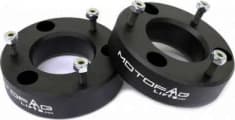
Custom Offsets carries wheels and tires, suspension, performance upgrades, and accessories built for the Explorer Sport Trac. From a clean leveling kit to a lifted build with aggressive fitment, we back every setup with real builds from our community.
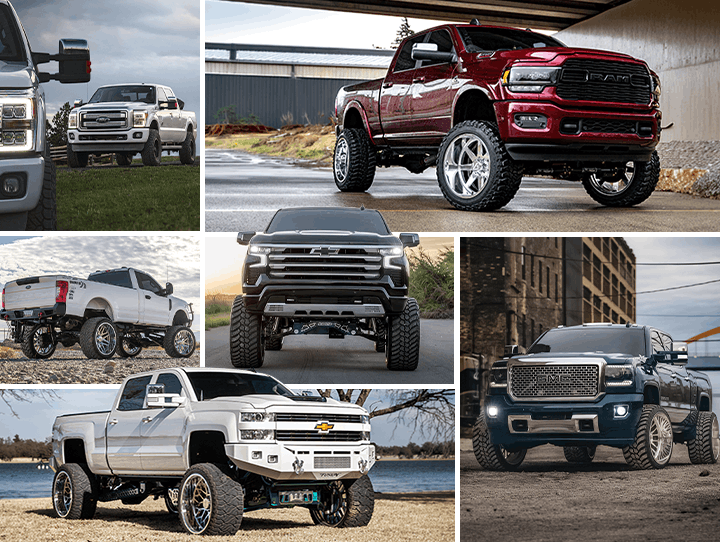
Wheels, tires, and suspension — the complete package for your build. From leveling kits to 12” lifts, paired with the wheels and tires to match. Every setup backed by guaranteed fitment.
See what other owners are running on their 2002 Ford Explorer Sport Trac – real fitment data from real trucks.
No scripts. No call centers. Our team builds and drives the same trucks you do — every recommendation comes from real-world experience. We’re not selling you a part, we’re helping you build your truck.



Introduced in early 2000 as a 2001 model, the first-generation Ford Explorer Sport Trac filled a gap Ford had never addressed before: a crew-cab mid-size pickup for the North American market. Built on a lengthened version of the second-generation Explorer's UN105 platform, the Sport Trac stretched the wheelbase to 125.9 inches to accommodate a 50-inch composite pickup bed while keeping the four-door Explorer cab. It slotted neatly between the Ranger SuperCab and the F-150 SuperCrew, competing against crew-cab versions of the Tacoma, Frontier, Dakota, and Colorado.
Power comes from the 4.0L SOHC V6, available in both flex-fuel and gasoline configurations. For 2002, Ford upgraded the chassis with four-wheel disc brakes, replacing the rear drums with the largest solid-axle rear discs offered on an Explorer at the time. Trims ran from the base XLS with steel wheels up through the XLT, XLT Premium, and the limited-production 2005 Adrenalin Edition with its sport interior, body-color trim, and unique badging. The Sport Trac's SUV roots and truck capability make it a genuinely interesting platform to build, and its 5x4.5 bolt pattern opens up a wide range of aftermarket wheel options.
A leveling kit raises the front of the Sport Trac to eliminate the factory nose-down rake and bring the front up level with the rear. This is the most common first move on this platform and it opens a little extra front clearance for a larger wheel-and-tire package. Our customer builds on leveling kits most often run 16-inch or 20-inch wheels with tires in the 30-to-33-inch range. Expect minor plastic trimming on most setups, though some bolt on clean with a slight rub at full lock. A leveling kit is a clean, low-commitment upgrade that transforms the stance without major surgery.
A 2.5-to-4-inch suspension lift or a combination of a leveling kit and body lift opens the Sport Trac up to 33-inch tires and, at the aggressive end, 35-inch tires. New shocks matched to the added height are part of any quality kit at this level. Wheel diameters from 15 to 20 inches all work here. Most builders run minor fender trimming to clear the 33s cleanly; the 35-inch end of the range fits harder and needs more work. This tier is where the Sport Trac starts to look like a real truck build rather than a stock SUV-based pickup.
A 6-inch-plus suspension lift combined with a body lift is the boldest documented path on this platform. At this height the Sport Trac runs 20-inch wheels with 33-inch tires and deep negative offsets for serious poke. Geometry-correction hardware is often part of a full kit at this level to manage the added height. This is a committed build: the truck sits tall, the stance is aggressive, and the visual presence is hard to miss. It takes planning and the right combination of lift and wheel fitment to execute cleanly, but the results speak for themselves.
An aftermarket air intake on the 4.0L V6 replaces the restrictive factory airbox with a larger-diameter intake tube and a higher-flow filter element. The result is a more direct induction path, a noticeable improvement in throttle response, and a stronger induction sound under acceleration. It is one of the easiest bolt-ons on this platform and a natural first step for anyone who wants the engine to breathe better.
A cat-back exhaust replaces everything downstream of the catalytic converter, leaving the cat itself in place. On the 4.0L V6, a cat-back opens up flow behind the engine and gives the Sport Trac a deeper, more aggressive exhaust note. The factory system is conservative; an aftermarket cat-back wakes up the sound and reduces backpressure without touching emissions equipment. Mid-pipe options are also available for builders who want to address the middle section of the system.
Beyond intake and exhaust, the Sport Trac responds well to supporting drivetrain work. Upgraded differential components, ring and pinion gear changes for a regear after a tire-size increase, and axle upgrades all help the platform handle the added stress of bigger tires and more aggressive use. Coil packs and spark plugs are worthwhile maintenance-adjacent upgrades that keep the 4.0L running cleanly. A supporting tune helps the engine management system get the most out of any combination of bolt-ons.
The Sport Trac's SUV-derived body and short bed give it a distinct look that responds well to targeted exterior work, and the interior benefits from practical protection upgrades that match how these trucks actually get used.
For a show-presence build, upgraded headlights and tail lights are the starting point: LED or projector headlight retrofits sharpen the front-end look and improve output, while LED tail lights clean up the rear. Fog lights are a factory option on some trims and an easy add on others. For builders running the Sport Trac on the trail or in low-light conditions, LED light bars mounted to the front bumper provide broad forward throw, and fog or pod lights fill in the near-field coverage. Rock lights mounted under the body highlight the suspension and hardware at shows or provide ground-level illumination on the trail.
The Sport Trac's composite bed and Explorer-derived body panels give builders a few specific upgrade paths. Hood options change the front-end character, and grille replacements are available to update the look. Paint protection film and body accent pieces help preserve the finish on a truck that sees real use. Fender flares extend coverage over wider-than-stock tires and protect the body from road debris the tires kick up. Running boards and nerf bars are a practical add given the Sport Trac's ride height, especially on a leveled or lifted build. A front bumper upgrade adds recovery points and a more aggressive front-end presence for builders who want that look.
Inside, the Sport Trac shares its cabin with the Explorer, which means a comfortable four-door layout with fold-down rear seats. Heavy-duty floor liners front and rear protect the carpet from mud, water, and daily wear. Seat covers keep the factory upholstery in good shape, especially on work-use trucks. Interior trim kits and accent pieces update the cabin's look without major work. The Sport Trac's fold-down rear seats and rubber floor option on base trims make it easy to keep clean, but a good set of liners is still the first interior upgrade worth making.
Good: A leveling kit to eliminate factory rake and open up front clearance for a larger wheel-and-tire package. Better: A 2.5-to-4-inch suspension lift with new shocks matched to the added height, opening the door to 33-inch tires and a more aggressive stance. Best: A 6-inch-plus suspension lift combined with a body lift, geometry-correction hardware, and upgraded shocks for a committed, tall build with deep negative offset fitment.
Good: A cold air intake for improved throttle response and induction sound on the 4.0L V6. Better: Intake plus a cat-back exhaust for a stronger note, better flow, and a more complete breathing upgrade. Best: Full intake and exhaust combination with supporting drivetrain work, a regear to match the tire size, and a supporting tune to optimize the whole package.
Good: Upgraded headlights or tail lights, a grille swap, and paint protection to sharpen the look and protect the finish. Better: Hood upgrade, fender flares to cover wider tires, running boards, and fog or pod lights for functional forward coverage. Best: Full front-end rework with a bumper upgrade, fender flares, rock lights for underbody presence, and a complete lighting package front and rear.
Good: Heavy-duty front and rear floor liners to protect the carpet from daily wear and mud. Better: Liners plus seat covers and interior trim accents to protect and update the cabin. Best: Full interior protection package with liners, seat covers, trim kits, and storage accessories that match the build's character.
Good: 20x9 +0 with 275/45R20 on stock suspension, a clean street stance that most builders run without modification. Better: 20x9 +18 with 33x12.50R20 on a leveling kit, a popular leveled setup where most need minor plastic trimming and a slight rub at full lock is common. Best: 20x12 -44 with 33x12.50R20 on a 6-inch suspension lift combined with a body lift, deep poke and an aggressive stance that takes planning and fender work to execute cleanly.
Good: Clean, practical improvement over stock with a sharper stance and better presence on the road. Better: Noticeably lifted and aggressive, a Sport Trac that turns heads and handles more than the factory setup ever could. Best: Full show-truck intent, maximum visual presence, a committed build that makes the Sport Trac's SUV roots completely unrecognizable.
It depends on your goal. Builders chasing stance and presence often start with wheels and tires or a leveling kit since those changes are immediately visible and set the direction for everything else. Builders focused on capability start with suspension. Performance-first builders go intake and exhaust first. There is no single right order: pick the category that matters most to your build and work outward from there.
Yes. Get pre-approved before you start building your cart so you know your budget going in. Pre-approval is fast and lets you plan the full build, suspension, wheels and tires, performance, accessories, without guessing at what you can spend. Once you know your number, putting the cart together is straightforward. Financing options are available at checkout to complete the purchase.
Absolutely. Our team handles both sides: fitment questions like which offset clears your fenders at a given lift height, and install questions like how mods stack, what hardware you need, and the sequence that makes sense for your build. The Sport Trac's Explorer-based chassis has some quirks worth knowing before you order, and our team can walk you through them.
Because we show you what actually fits, not just what the catalog says might fit. Our Gallery has real Sport Trac builds from our customers running real setups, so you can see exactly what a leveling kit and 20-inch wheels look like on a truck like yours before you buy. We back that with fitment expertise, mounted-and-balanced wheel and tire packages ready to bolt on, and a team that knows this platform.